Athens walls: street art, empty buildings and who the paint is for
A walk through Exarchia, Psyrri, Metaxourgeio and Kerameikos, reading the murals, tags and empty houses of central Athens and the arguments around them.

We earn a commission on some bookings and books. As an Amazon Associate I earn from qualifying purchases.
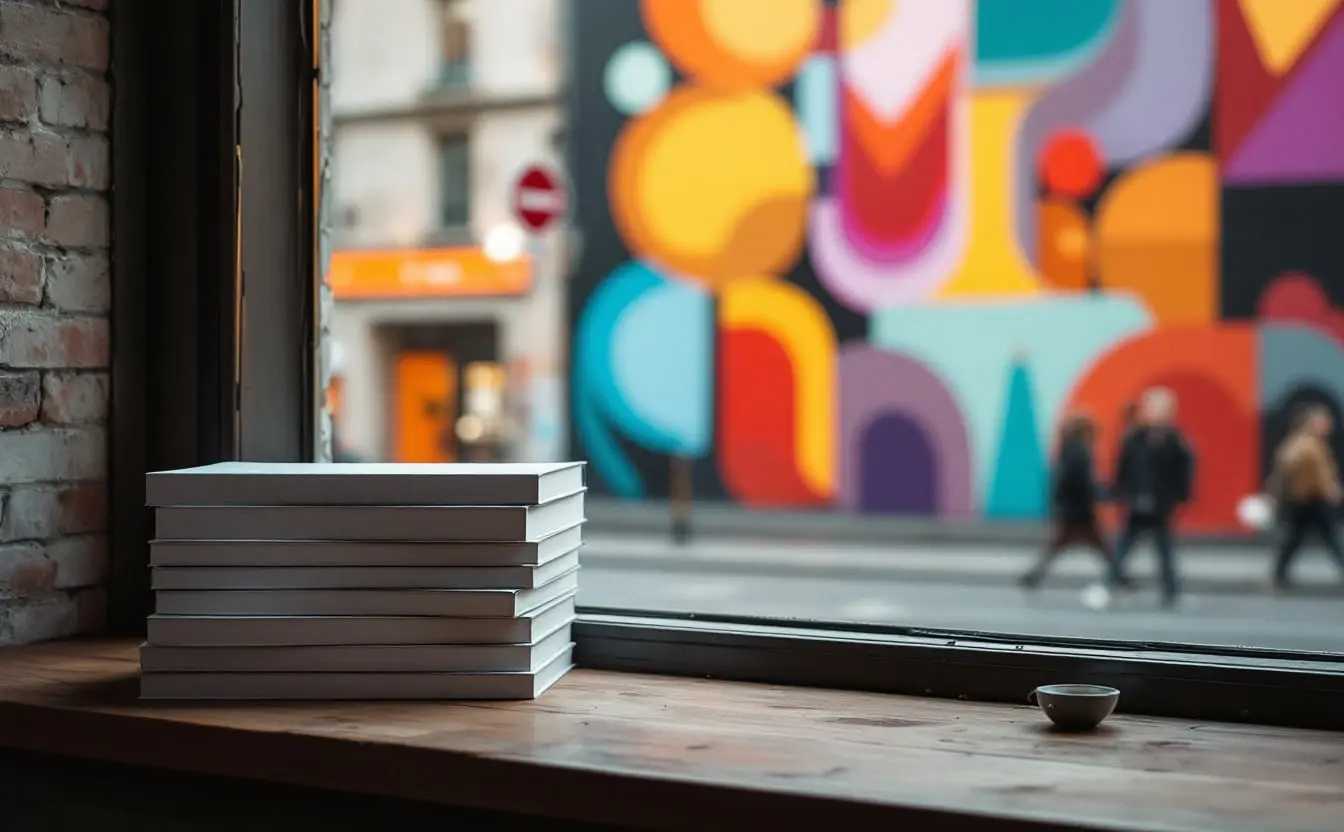
The first thing many visitors notice in central Athens is not the Acropolis. It is the paint. Shop shutters, kiosk sides, marble door frames, electricity boxes and the lower two metres of almost every building between Omonia and the Polytechnic carry writing, often in so many layers that the original colour of the wall is anyone's guess.
I walk these streets most days and I still change my mind about them. On some mornings the walls read as damage, on others as a daily newspaper, and now and then as an archive nobody asked for. Most Athenians I know hold all three views at once, depending on whose front door is involved. What follows is a walk through four neighbourhoods where the argument is easiest to see (Exarchia, Psyrri, Metaxourgeio and Kerameikos), with notes on what you are looking at and how to behave while you look.
Why the walls look like this
Three things prepared the canvas long before anyone picked up a spray can. The first is the polykatoikia, the concrete apartment block that rebuilt Athens after the Second World War, much of it through antiparochi, an arrangement in which a landowner handed a plot to a builder in exchange for some of the finished flats. Blocks went up one plot at a time and to different heights, leaving the city full of kalkania, the blank side walls left exposed when the neighbouring block was never built or stopped a few floors short. Those windowless walls are where the largest murals in Athens now sit.
The second is emptiness: the centre has a great many buildings with nobody in them. Some are listed neoclassical houses from the nineteenth and early twentieth centuries, which owners may not demolish and often cannot afford to restore. Others are caught in inheritance, divided among so many heirs that nobody can agree to sell, repair or let. The debt crisis that began around 2010 closed shops and offices on top of that, and property taxes turned an unused building into a cost rather than a savings account. A boarded doorway is an invitation to anyone carrying paint.
The third is politics. Since the fall of the military dictatorship in 1974, Athenian walls have carried slogans, calls to demonstrations, posters for assemblies and concerts, and the names of people the writers want remembered. Street art arrived on top of an older habit of using the wall to answer back. That is why a stencilled face here is rarely only decoration, and why a fresh coat of municipal paint gets read as a political act as well.
Exarchia: the wall as newspaper
Begin at the Polytechnic on Stournari Street, where the student uprising of November 1973 ended when a tank broke through the main gate. The university's walls and the buildings facing them have been painted, scrubbed and painted again for decades, and they usually carry a mix of slogans, anniversaries and large painted figures.
From there the neighbourhood climbs towards Strefi Hill. Exarchia is small, a wedge of steep streets you can cross on foot in a quarter of an hour, and it has long been home to students, publishers, musicians and the city's anarchist and left-wing movements. Its walls work like a noticeboard. A poster for a meeting goes up over a poster for a concert, which went up over a stencil from some earlier winter, and the weather peels the stack back until three campaigns show through at once.
Exarchia Square itself has been largely fenced off for work on a station of the new metro line, a project many residents opposed, and the hoardings filled with writing almost as soon as they went up. Higher up, Kallidromiou Street holds a produce market on Saturday mornings, and the side streets around it are where the quieter work hides: paste-ups at knee height, a painted bird over a doorway, faces on the plaster of houses that have been empty for years.
This is the neighbourhood where visitors most need manners. People live here, some in conditions they did not choose, and many are tired of being treated as scenery. Police cleared a number of squats in the area after the change of government in 2019, and a photograph of a building or a face can still matter to the people connected with it. Photograph walls, not residents. If someone asks you to lower the phone, lower it.
Psyrri: a gallery with a bar attached
Walk south past Omonia and down Athinas Street, past the central meat and fish market, and Psyrri tells a different story. This was a quarter of small workshops. Today it is mostly tavernas, bars and hotels around Iroon Square, and its walls are the most photographed in the city. The work here is large and finished: cartoon characters, portraits several metres tall, paper figures climbing drainpipes, small plaster heads fixed high on corners where they are hard to remove.
Much of what you see in Psyrri was painted with someone's blessing. Bar owners commission walls, artists trade spaces with each other, and guided street art walks pass through several times a day. That makes the work more polished, and also temporary in a different way, because a piece survives only as long as it suits the business behind it. When the bar changes hands, the wall often does too.
The best time to see Psyrri is early, ideally on a Sunday morning. Many of the rolling shutters are painted, and you only see them when the shops are shut. By midday the shutters are up, the chairs are out and the best pictures on the street have rolled away into the ceiling.
Metaxourgeio and Kerameikos: empty houses, new money
Cross Pireos Street to the north-west and the city gets quieter. Metaxourgeio takes its name from a nineteenth-century silk mill, and the restored mill building on Avdi Square now houses the Municipal Gallery of Athens. Around it run streets of low neoclassical houses, many roofless, with fig trees growing out of balconies and ground-floor doorways bricked up. It is the most melancholy stretch of this walk and, for painters, one of the most rewarding, since old lime plaster takes paint well and nobody comes to clean it.
Kerameikos, next door, borrows its name from the ancient potters' quarter. The archaeological site with its ancient cemetery still lies at its edge, a green hollow below street level, and beyond it the old gasworks at Gazi have become Technopolis, a municipal cultural venue among the old chimneys. In the streets around Kerameikos metro station, studios, small galleries and rehearsal rooms sit between apartment blocks whose side walls carry some of the city's biggest murals.
These two districts show the uncomfortable part of the story. In the 2010s artists and project spaces moved into cheap, half-empty streets here, and when documenta 14 split itself between Kassel and Athens in 2017, international attention followed. Renovation, short-term rentals and buyers from abroad came after. Painted walls, once a sign that nobody was minding a street, started appearing in property listings.
A field guide to what is on the wall
Visitors tend to call everything graffiti, but the people making it draw sharp distinctions. So do the people paying to remove it.
| What you see | What it usually is | Who tends to make it | How it is usually received |
|---|---|---|---|
| A fast signature in one colour | A tag | A graffiti writer marking presence | Hated by owners, counted within the scene |
| Rounded letters in two or three colours | A throw-up | A writer working quickly, often at night | Seen as vandalism by most residents |
| Large lettering with depth and shading | A piece | A writer or crew with time and a plan | Admired by other writers, tolerated by some owners |
| A short phrase or face sprayed through a cut-out | A stencil | Often political, usually anonymous | Read as speech, wiped fast near official buildings |
| Paper figures glued to plaster | A paste-up | Artists trying out ideas cheaply | Mostly left alone until the rain takes it |
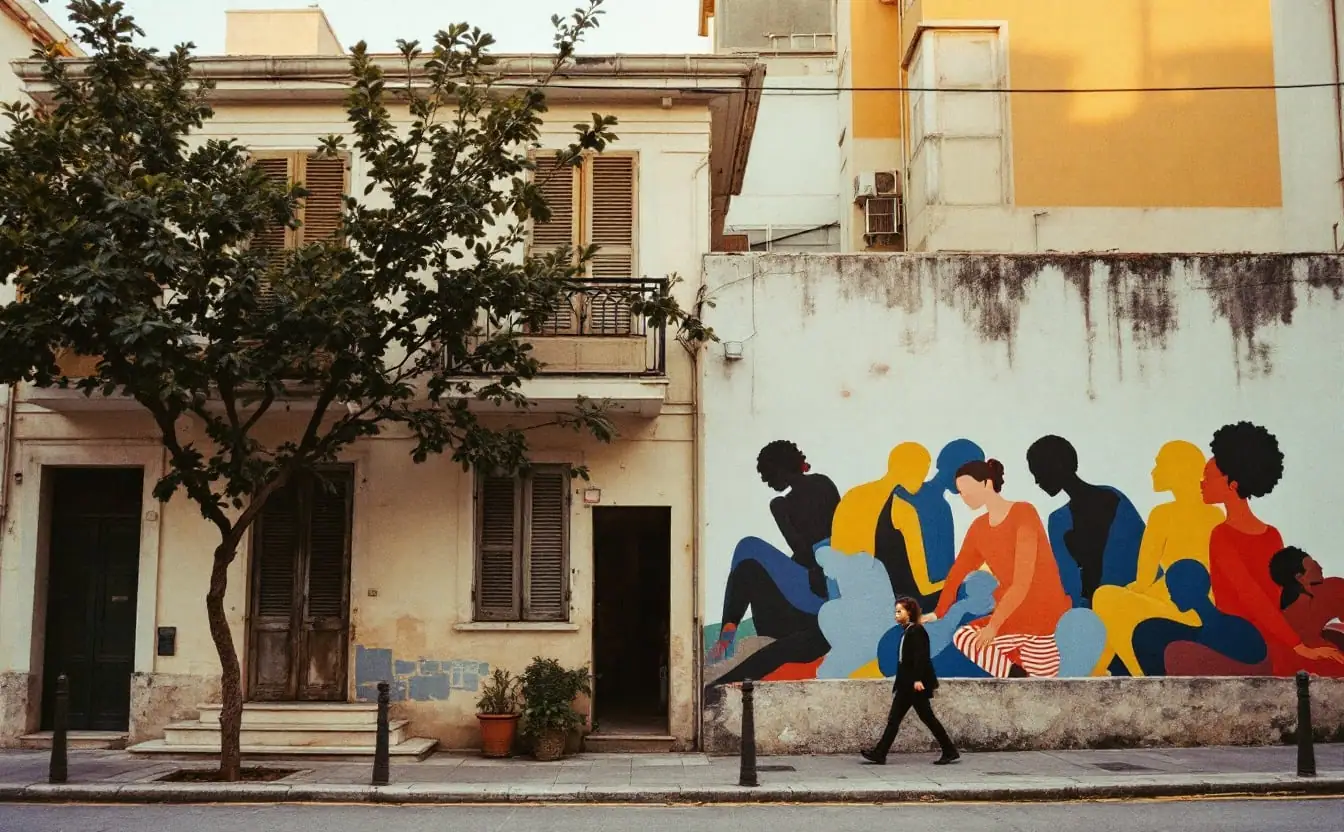
| Huge figures on a windowless side wall | A commissioned mural | An artist working with the owner's consent | Loved by visitors, argued over by neighbours |
Vandalism, heritage or attraction?
The owner's case is simple. Cleaning a facade costs money, and on a listed building the work has to follow conservation rules. Marble is porous, so spray paint sinks into it and comes out, if at all, with chemicals and patience. The municipality sends crews to repaint, and on the busiest streets new tags arrive within days. For an elderly owner who kept a family house standing through the crisis years, a tag across the front door is one more bill, not culture.
The writers' case is that the tag is where all of this began, and that the glossy commissioned mural is the thing to worry about, since it so often works as advertising for a street about to become expensive. Some argue that certain walls deserve protection as history, the Polytechnic's above all, because they record what the city was arguing about in a given year. Others think the whole point of a wall is that it changes, and that the right response is to photograph and archive rather than varnish.
Tourism sits awkwardly between the two. Street art walks bring visitors and some money into Psyrri and Exarchia, but that money mostly reaches bars and guides, not the people whose walls are on show. The paint, to my mind, is a symptom: in my experience a street with lived-in ground floors, open shops and people at the windows collects fewer tags and better murals. The most useful thing the city could do for its walls is to put people back behind them.
Walking it well
The whole route takes half a day at a slow pace. A few habits make it better for you and for the neighbourhoods.
- Go early. Morning light is kinder to colour, the streets are emptier, and on Sundays the painted shutters are down.
- Stay out of empty buildings. Floors and stairs in roofless houses give way, and a building that looks abandoned may be someone's home.
- Leave nothing behind, including your own small mark on a wall that already has a hundred.
- Credit the artist if you post a photograph and know the name, and avoid shooting faces, homes or doorways without asking.
- Spend your money locally. A coffee in Exarchia or lunch near Avdi Square does more for these streets than a sticker on a lamp post.
For how short-lived work changes a public place, read what temporary art does to a city square next. The urban culture and public art strands carry more from the street.
Finish at Technopolis as the light goes. Sit on a low wall near the old gasworks chimneys and watch the side walls of the blocks around you turn orange. For ten minutes the murals, the tags and the bare plaster are all the same colour, and the argument rests until morning.
If you would rather follow a route than improvise one, the Athens street art walk in our Atlas strings the stops together with walking times between them, and lets you drop the ones you don't have time for.