Shade, water and benches: public space for hotter summers
What European cities are trying as summers get hotter: trees, shade, drinking fountains, misting, cool streets and better benches, plus a street checklist.
We earn a commission on some bookings and books. As an Amazon Associate I earn from qualifying purchases.
On a hot afternoon in late August, the hardest working object on my street in Vienna is a plain metal drinking fountain. Children fill bottles at it, cyclists put their heads under it, a dog drinks from the puddle below, and an older man stops for a mouthful on his slow way to the shop. It costs nobody anything and asks nothing of anyone. Few pieces of street furniture earn their place so clearly.
Summers in Central Europe have grown hotter, and heatwaves come more often and last longer. Public space is where that shows first: the bus stop without shade, the square paved in pale stone that throws the glare back up at you, the playground that is unusable from noon until five. Cities have started to respond, some with long-term plans and some with cheap, quick fixes. As another summer ends, this is a look at what they are trying, what seems to work, and what to check on your own street.
Why squares get so hot
Cities store heat. Asphalt, stone, brick and concrete soak up sunshine during the day and give it back at night, so a dense neighbourhood can stay warm long after the countryside around it has cooled. Planners call this the urban heat island. The nights are the dangerous part. Older people, people with chronic illnesses and anyone living in a top-floor flat under a hot roof need the night to recover, and in a heatwave they do not get it.
Some squares make it worse. Wide paved spaces designed for parades, markets or parking have no shade and no soil, and every surface is in the sun. Dark asphalt gets very hot to the touch; pale stone stays cooler but reflects light and heat onto the people crossing it. A lawn and a tree do the opposite: they shade the ground and cool the air around them as water evaporates from leaves and soil. That simple difference explains most of what cities are now trying.
Shade comes first
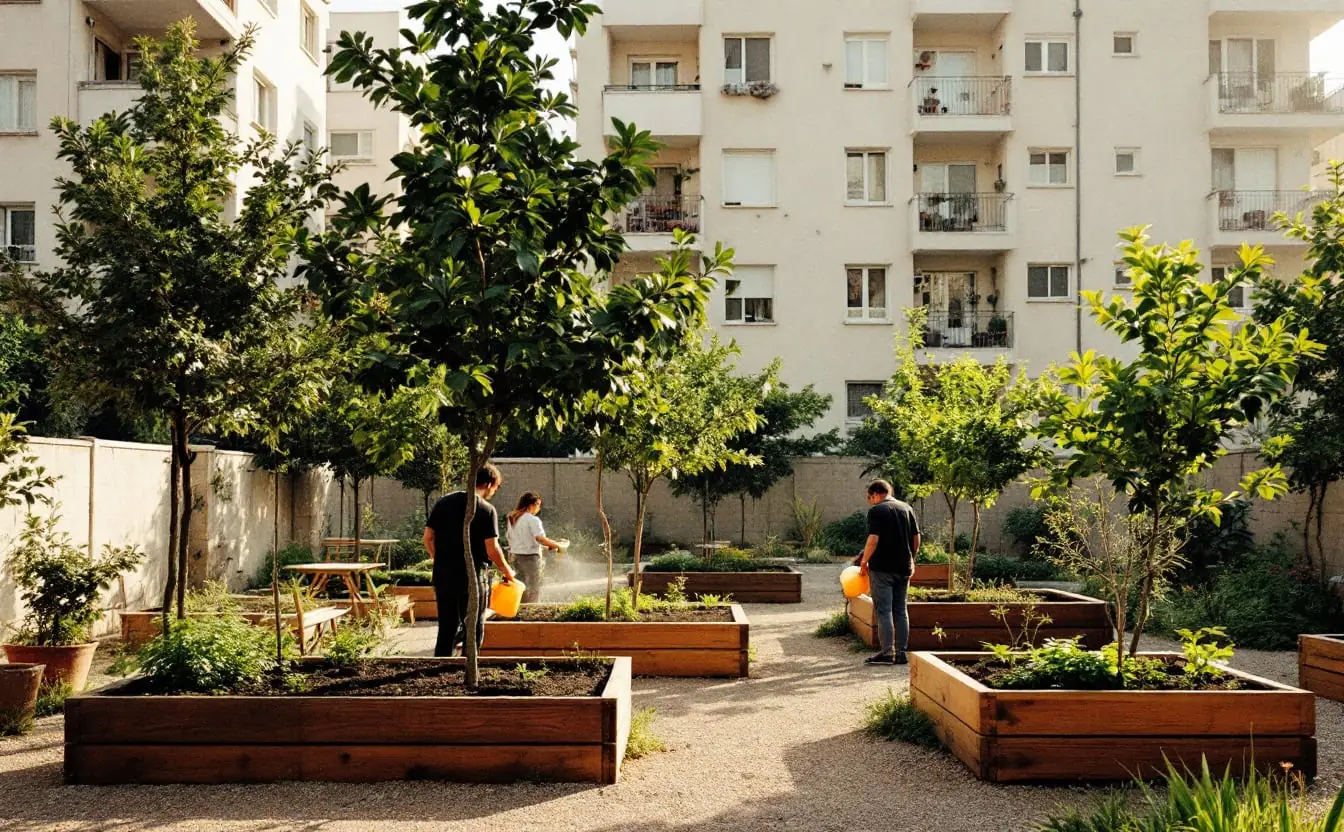
Nothing beats a big tree. A mature canopy shades the pavement, the bench and the facade at once, and it keeps working without electricity. The catch is time. A newly planted street tree takes many years to cast real shade, and in its first summers it needs regular watering or it dies, which is why so many fresh plantings end up as dry sticks in a guard.
Vienna has been rebuilding streets around the sponge city principle: instead of a small pit, a tree gets a wide bed of coarse stone and soil under the pavement, where roots can spread and rainwater can be stored. It is invisible once the paving goes back down, and it is one of the most useful things a city can bury. The courtyards of the city's council estates, with their old trees and unsealed ground, show what decades of growth can do, as I wrote in a piece on Vienna's Gemeindebau courtyards.
Built shade fills the gap while trees grow. Seville and Córdoba have long stretched canvas awnings across shopping streets in summer. Bologna's porticoes, inscribed on the UNESCO World Heritage List in 2021, give the city kilometres of covered walking. Pergolas, shade sails over playgrounds, deeper bus shelter roofs and arcades in new buildings all do the same job on a smaller scale. None of them cools the air the way a tree does, but they take the sun off people's heads, and that is often enough.
Water you can drink, water you can feel
Vienna is lucky with water. Its supply comes from Alpine springs through two mountain spring pipelines, the first opened in 1873 and the second in 1910, and the city has hundreds of public drinking fountains. Free drinking water is the cheapest heat measure there is, and also one of the most unevenly spread. Count the fountains in a wealthy central district and then in an outer one, and you will often find a difference.
Misting is the newer fashion. Fine nozzles spray a cloud of tiny droplets that evaporate almost at once and cool the air around them. It works best in dry heat and less well when the air is already humid, and it uses comparatively little water. Vienna has fitted misting to some drinking fountains and installed permanent misting columns on certain squares. Children treat them as a playground, which is a fair verdict.
Then there is water you can get into. Splash fountains set flush in the paving, paddling pools in parks, and swimming in open water all count. Vienna has the Danube Island and the Old Danube.
Copenhagen has its harbour baths, and Basel its long tradition of drifting down the Rhine. In the summer of 2025 Paris opened places to swim in the Seine. A city where people can cool off in public without paying an entrance fee is a city that has thought about heat.
Cool streets and other quick measures
Since 2019, Vienna has turned selected streets into cool streets during the summer: traffic is kept out or slowed, and the space fills with misting, shade, seating, plants and sometimes water to play in. They are tactical by nature, the same logic as the parklets and painted plazas I described in an earlier piece on leftover spaces, and some have later been rebuilt permanently with trees and fixed misting.
Other cities have looked indoors. Barcelona has built up a network of climate shelters, among them libraries, schools, civic centres and parks, where anyone can sit out the hottest hours. Paris has been turning asphalt school courtyards into green, shaded spaces. Athens created the post of chief heat officer in 2021, the first such role in Europe, to coordinate the city's response. The details differ, but the principle is shared: during a heatwave, people need a cool place within walking distance, and the city should know where those places are.
In practice, the most used cool room in many European cities is still the air-conditioned shopping centre. It is open long hours, it has toilets and it asks no questions, as long as you look like a customer. That last condition is the problem. A library, a church or a museum lobby with a free bench does the same job without the condition, and a city map of such places, kept up to date and posted where people actually look, is worth more than another pilot project.
Benches for the long afternoon
Benches are where heat policy meets real bodies. Older residents often plan their walks around them, and a missing or unusable bench can turn a ten-minute errand into one they no longer attempt. In summer the question is not only whether a bench exists, but whether it is usable at three in the afternoon.
Placement matters most. The sun moves, so a bench in shade at ten in the morning can be in full glare by mid-afternoon; good designers look at the shadows in the hottest hours, not at the plan.
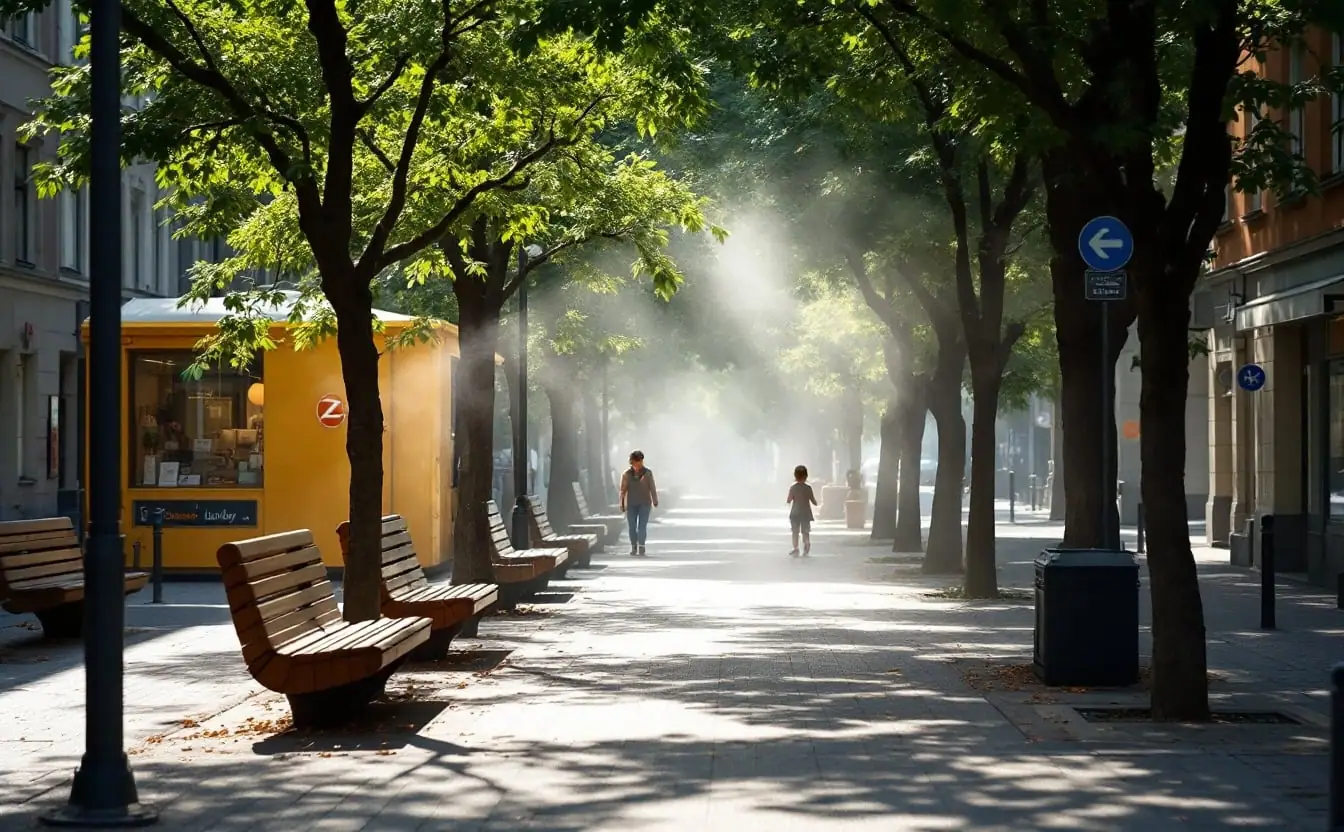
Material matters too. Dark metal burns, stone holds the day's heat into the evening, and wood stays the kindest to touch. Backs and armrests help people rest and stand up again. Benches placed near water and public toilets get used far more than lonely ones.
The heat also sharpens an older argument about who a bench is for. Seats sloped so nobody can stay, armrests added to stop anyone lying down, benches removed because the wrong people used them: all of these become harder to defend when sitting in the shade is a health measure.
A heatwave checklist for your street
Walk your own street or square on a hot afternoon and check:
- Is there continuous shade on at least one side of the main walking route?
- Can you sit in the shade between noon and six without buying anything?
- Is there free drinking water within a few minutes' walk?
- Are public toilets close by and open?
- Are the surfaces around seating planted, shaded or pale rather than dark asphalt?
- Do young street trees get watered in dry spells, and who does it?
- Is there an indoor cool space nearby, such as a library or community centre, open in the afternoon?
- Do the bus stops have roofs that shade the people waiting, not only the timetable?
- Is there somewhere children can get wet?
- Does the street stay usable after dark, with light and seating, for people who go out once it cools?
Street life after sunset
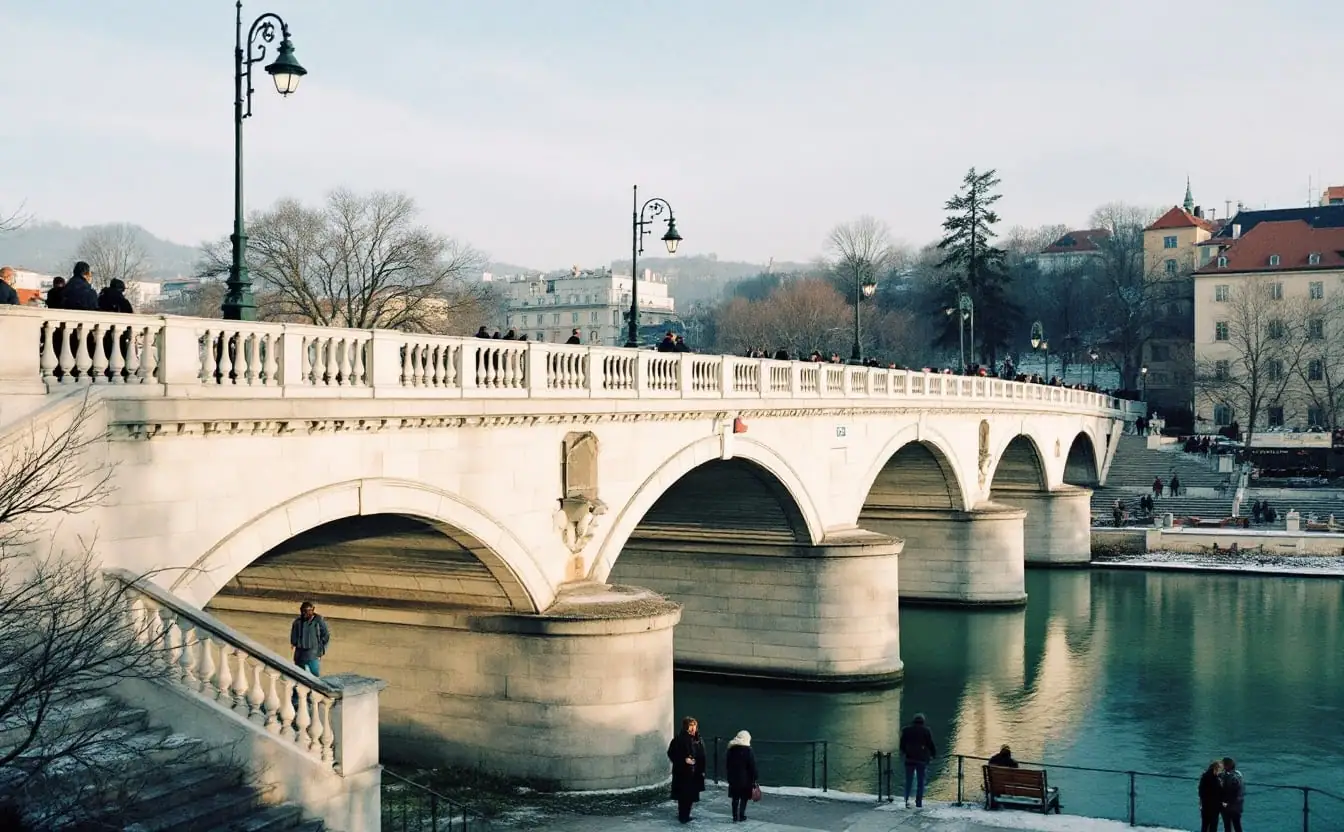
Heat changes the rhythm of a city as much as its furniture. On the hottest days, streets empty at noon and fill again after sunset. Parks stay busy until late, people eat outside, open-air cinemas and night markets do well, and the river banks become the city's living room. It is a rhythm that southern European cities have lived with for a long time, and central European ones are learning it.
It brings conflicts of its own. People sleeping with their windows open and people talking below them have different ideas about a summer night, and squares that work as evening refuges need lighting, toilets and someone keeping an eye on the noise. The way people use streets in the evening is a theme that runs through the urban culture strand, and heat will make it a bigger one.
Before the next heatwave, find two things on your usual route: the nearest drinking fountain and the nearest bench that is in shade at three in the afternoon. If either is more than a few minutes away, write to your district council and say so. It is a smaller request than a new square, and a far easier one to grant.