Sculpture parks in Europe worth a detour, from Oslo to Yorkshire
Five European sculpture parks worth a detour, from Vigeland and Ekeberg in Oslo to Middelheim, Kröller-Müller and Yorkshire, with tips on how to see them.

We earn a commission on some bookings.
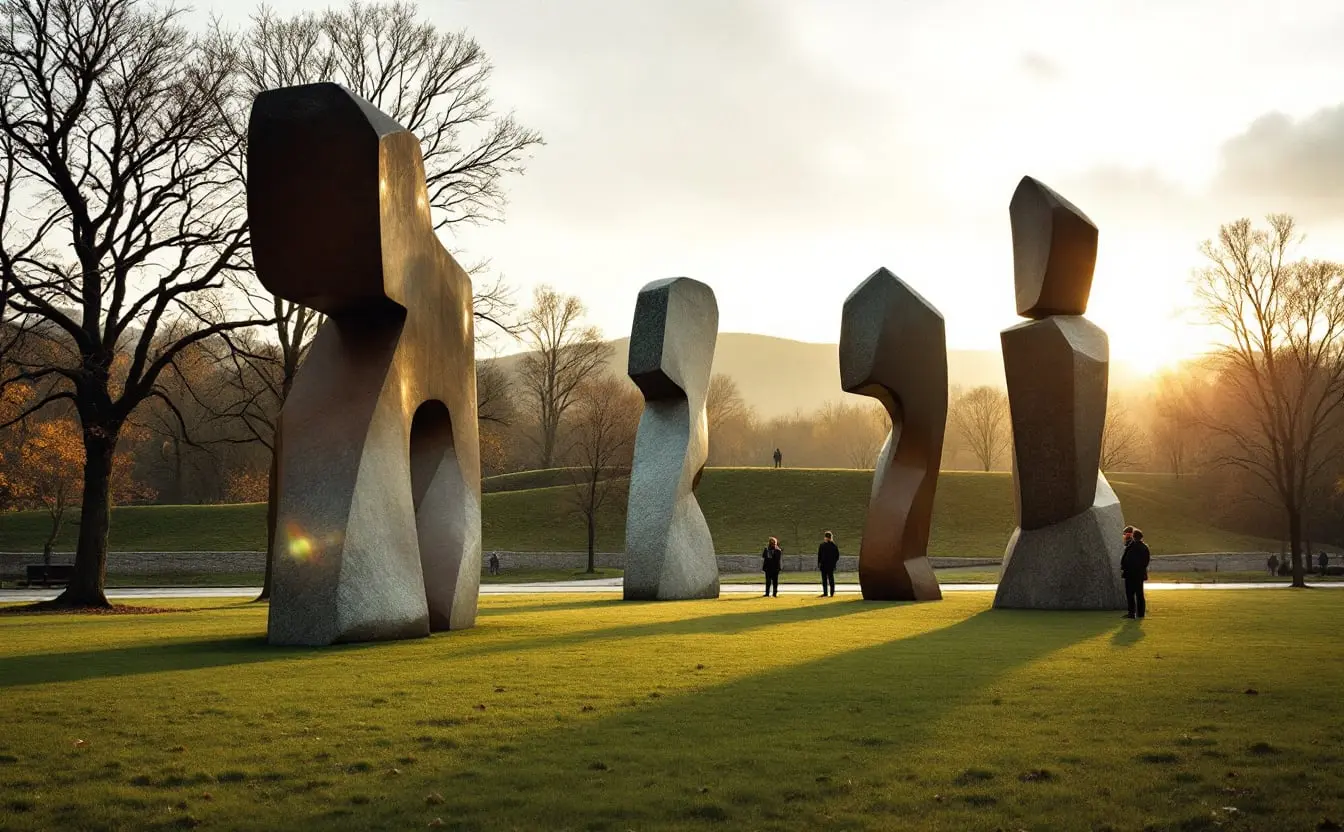
A sculpture in a city square has to compete with buses, café tables and pigeons. A sculpture in a park gets something rarer: room, weather and time. You come at it across a lawn, you see its back before its face, and you watch the light move over it while you make up your mind. Good sculpture parks are built around that slow approach, and they are among the few places where modern sculpture is seen the way most of its makers hoped, outdoors and in the round.
Europe has dozens of them, from municipal lawns with a handful of donated bronzes to estates the size of a farm. The five below are the ones I would cross a border for, chosen because each does something different with the same few ingredients: grass, trees, stone and metal. I have stuck to what each place is and how it works, not to temporary shows, which come and go.
Five parks at a glance
| Park | Where | Setting | Look for |
|---|---|---|---|
| Vigeland Park | Frogner Park, Oslo, Norway | A formal axis through a city park | One sculptor's whole cycle of human life in granite and bronze |
| Ekebergparken | Ekeberg hillside, Oslo, Norway | Wooded slope above the fjord | Modern and contemporary work among old trees, long views |
| Middelheim Museum | Antwerp, Belgium | Historic park run by the city | Classic modern bronzes next to newer work made for its spot |
| Kröller-Müller sculpture garden | Hoge Veluwe National Park, Netherlands | Garden at the edge of heath and woodland | Pavilions, a walk-in work by Dubuffet, sculpture set in landscape |
| Yorkshire Sculpture Park | Bretton estate, near Wakefield, England | Eighteenth-century parkland with lakes | Moore and Hepworth on home ground, a Turrell skyspace |
Oslo: two parks, two arguments
Oslo is the obvious place to start, because it has two sculpture parks on opposite sides of the centre that could hardly be more different. One is the life's work of a single man laid out with total control. The other is a collector's park where dozens of artists share a hillside.
Vigeland Park
Vigeland Park (Vigelandsanlegget in Norwegian) lies inside Frogner Park, west of the centre. Gustav Vigeland made an agreement with the city: it built him a studio, and in return his later work would belong to Oslo. The result is more than two hundred sculptures in bronze, granite and wrought iron, arranged along an axis he designed himself, running from the main gates over a bridge lined with bronzes, past a great fountain, and up a series of terraces to a granite column.
Every figure is human and naked, and the subject is the span of a life: infants, quarrelling children, lovers, the old bent together. On the bridge, the small bronze of a boy stamping his foot in a rage, known as Sinnataggen, is the figure most visitors go looking for. The Monolith at the top was carved from a single block of granite and holds 121 figures climbing and tangled towards the sky. Up close it is hard to read. From the foot of the steps it turns into one shape.
Vigeland divides people. The scale is overwhelming, and so is the sameness: one artist's vision, carried out over decades with carvers and founders, and nobody to argue with him. Some visitors find that monumental, others find it airless. My advice is to walk the axis once from the gates, as he intended, then leave it and come back across the lawns, where the bronzes on the bridge read as a crowd rather than a parade. His former studio and home, just south of the park, is now the Vigeland Museum, where the plaster models show how the whole thing was worked out.
Ekebergparken
On the hill above the harbour, on the other side of the centre, Ekebergparken opened in 2013 and works almost the opposite way. It is a wooded slope with paths, old trees and long views over the city and the fjord, and the sculpture comes from many hands: modern bronzes and contemporary commissions by Norwegian and international artists, set in clearings and along paths rather than on an axis. Private money on public land made it a subject of argument in the city before it opened.
The best of them use the slope, the trees or the view, so that you notice the place as much as the object. The road along this hillside is usually taken to be the one in Edvard Munch's The Scream, which gives the view an extra charge whether or not you believe it. On the edge of the park, the white functionalist Ekeberg Restaurant, opened in 1929, is worth a look as architecture in its own right.
Practical notes for Oslo
Both are public parks, so you can walk in without booking anything. Give Vigeland a morning, when low sun rakes across the granite and picks out the carving, and Ekeberg an afternoon, when the light swings round over the water. In late autumn the northern day is short, so start early and keep the hillside for the brighter hours. Vigeland's axis is mostly paved and level; Ekeberg is a slope with steep stretches and roots underfoot, so wear shoes with grip after rain. With only a day or two, a hop-on hop-off bus is one way to string the city's other sights together and save your legs for the parks.
Middelheim, Antwerp: a city that kept at it
Middelheim Museum is what happens when a city decides that sculpture belongs outdoors and keeps at it for decades. It is run by the city of Antwerp and has shown sculpture in the open air since 1950, in a park of lawns, old trees and a small castle south of the centre.
The collection runs from the late nineteenth century to the present. The older pieces, the classic modern bronzes, mostly sit where you expect them, on lawns with space around. The newer work is less obedient. Some of it hides in the trees, some you walk into, some looks at first like part of the park's own furniture. That mix makes Middelheim a good place to watch ideas about outdoor sculpture change, from the object on a plinth to the work that only makes sense in one spot.
Kröller-Müller: sculpture at the end of a bike ride
The Kröller-Müller Museum is famous for its paintings, above all one of the largest Van Gogh collections anywhere, and plenty of visitors never get past them. That is a mistake. Beside the museum lies one of the largest sculpture gardens in Europe, and the setting is the Hoge Veluwe National Park in the east of the Netherlands: heath, sand, pine and birch. The collection was built by Helene Kröller-Müller, the museum opened in 1938 in a building by Henry van de Velde, and the garden was added later.
Look for Jean Dubuffet's Jardin d'émail, a white landscape outlined in black that you climb into rather than look at. Gerrit Rietveld's pavilion, rebuilt here, is an open structure of concrete blocks, steel and glass that shows smaller sculptures in daylight. Marta Pan's floating sculpture drifts on a pond, and Claes Oldenburg's giant trowel sticks out of the ground as if a gardener the size of a house had just stepped away. Because the museum sits inside the national park, you enter the park first, and the park's white bicycles turn the ride across the heath into part of the visit. Give it a full day.
Yorkshire Sculpture Park: where Moore and Hepworth came from
Yorkshire Sculpture Park opened in 1977 in the grounds of Bretton Hall, an eighteenth-century estate near Wakefield, and it is usually described as the first sculpture park of its kind in Britain. The landscape does much of the work: rolling parkland, lakes in the valley, woodland, sheep grazing in the fields.
The location is not an accident of taste. Henry Moore was born in Castleford and Barbara Hepworth in Wakefield, both a few miles away, and their work is at home here. Moore's big bronzes on open grass are best seen from a distance first, against the sky, then close enough to see the surface. Inside an old deer shelter on the estate, James Turrell cut an opening in the ceiling; you sit on the bench round the walls and watch the sky turn into a flat panel of colour. Go at dusk if you can. In Wakefield itself, The Hepworth Wakefield, a separate gallery by David Chipperfield on the river, makes a natural second stop.
Closer to home: stone and wood after the symposiums
In my part of Europe, sculpture parks often grew differently, from symposiums where sculptors gathered for weeks to work in the open and left what they made behind. Forma Viva, started in Slovenia in 1961, is the best known. Its stone pieces stand among olive trees above the sea at Seča near Portorož, and its wooden ones around the former monastery at Kostanjevica na Krki. They are rougher and more weathered than the grand parks above, and the setting does half the work.
The memorial sculpture of the Yugoslav decades belongs to a different family, built to commemorate rather than to be strolled past, and it needs a different kind of visit, set out in a guide to visiting the spomeniks. Many parks also run temporary programmes alongside their collections, and those raise the same questions as temporary art in a city square: what it leaves behind, and who decides when it goes.
How to see a sculpture park well
- Walk all the way round each piece you care about at least once. Sculpture outdoors is made to be seen from many sides, and the back is often the better view.
- Go early or late. Raking light shows carving and casting; flat midday light makes bronze look like plastic.
- Look before you read the label. Then read it, and look again.
- Ask why the piece is in this spot: what it faces, where the path brings you to it, what it hides.
- Touch and climb only where a work invites it. Skin oils and shoes wear patinas and stone faster than weather.
- Dress for grass. Lawns stay wet long after the rain stops, and most parks have more slope than the map suggests.
- Check before you travel what is on show. Outdoor works are sometimes taken away for conservation, and loans end.
- Leave time to sit. A bench with a good view of one piece teaches more than a fast lap of fifty.
If this list makes you want more, the public art strand gathers writing on monuments, murals and sculpture in cities. But if you only manage one of these parks, make it a day with a long, low sun, and end it at the top of the terraces in Frogner Park, with the Monolith behind you and the whole axis falling away towards the gates.