European cities for street art: seven walks worth planning a trip for
Seven European cities where street art rewards a walk, from Berlin and Lisbon to Glasgow and Thessaloniki, with what each does best and where to begin.

We earn a commission on some bookings.
Every few months someone asks me which European city is the best for street art, as if there were a league table. There isn't one, and the walls would make nonsense of it anyway: the painting you travelled for can be gone by the time your plane lands. What Europe does have is a handful of cities where the conditions line up. Plenty of walls, a scene that keeps repainting them, a council that tolerates or even pays for it, and neighbourhoods compact enough to cover on foot.
The seven below have all of that, and each has its own walk planner in our Atlas, so the idea of a trip can turn into an actual route on a map. I have ordered them by character rather than rank. Some cities give you commissioned murals the height of apartment blocks; others give you tags, paste-ups and politics in narrow lanes. Knowing which you want is half the choice.
The seven at a glance
| City | Best for | Where to begin | Feel of the walk |
|---|---|---|---|
| Berlin | Wall history, scale and sheer variety | Friedrichshain | Long, flat, mixed |
| Lisbon | Big commissioned murals, tiles and views | Calçada da Glória | Steep, bright, panoramic |
| Athens | Raw, political walls in the old centre | Psyrri | Dense, gritty, central |
| Glasgow | A council-backed trail of giant murals | The city centre | Compact and easy in any weather |
| London | Constant turnover in the East End | Shoreditch | Busy, commercial, always changing |
| Vienna | Legal walls along the canal | The Donaukanal | Linear, relaxed, by the water |
| Thessaloniki | Sculpture and walls between sea and hill | The waterfront | Seafront first, then a climb |
Berlin
The obvious first choice, and for good reason. Painting on walls here has a direct line back to the 1980s, when artists covered the western face of the Wall, and the city still seems to have more painted surface per street than anywhere else I know in Europe. Begin on Mühlenstrasse at the East Side Gallery, the longest surviving stretch of the Wall, which our guide to the East Side Gallery covers painting by painting. Then cross the Oberbaum Bridge into Kreuzberg, where huge murals fill the blank end walls of apartment blocks and the side streets carry layer upon layer of stencils and paste-ups.
On a wet afternoon, the Urban Nation museum in Schöneberg is given over entirely to urban contemporary art. The Berlin street art walk joins Friedrichshain and Kreuzberg into one route, and you can drop any stop you have already seen.
Lisbon
No city on this list treats street art more openly as part of its public culture. The council's own street art office, the Galeria de Arte Urbana, was set up in 2008, and it runs rotating panels beside the Glória funicular as well as backing large murals across the city. Alexandre Farto, the Portuguese artist known as Vhils, carves faces into plaster and brick instead of painting them, and his portraits have become something of a signature for the city. Then there are the tiles: Lisbon's old glazed facades are the oldest public art on its streets, and younger painters borrow their patterns constantly.
The Lisbon street art walk gathers the best of these walls into one route on the map. Build rests into the day. The hills are real, and the views from the top are part of the reward.
Athens
The rawest of the seven. The years of economic crisis after 2010 left many buildings in the old centre empty, and their walls filled up with everything from quick tags to large, careful murals, especially in Psyrri, Kerameikos, Metaxourgeio and Exarchia. Much of it is political, some of it angry, plenty of it funny. Athenians argue about whether it is art, vandalism or a tourist attraction, and the honest answer is that each label fits some walls.
The Athens street art walk stays within these central districts, so you can fold it into a day that also takes in the ancient sites. These are lived-in neighbourhoods with their own politics. Photograph the walls, not the people, and in summer walk in the morning before the heat settles on the streets.
Glasgow
The most organised city here, and the easiest to plan. The City Centre Mural Trail is a council-backed route of large murals painted on gable ends and side walls across the centre, many of them on a scale you notice from the end of a street. Smug's modern St Mungo on High Street, a bearded man with a robin on his hand, nods to the old stories behind the city's coat of arms, and it is a fair introduction to the trail's mix of local reference and photographic realism.
Our Glasgow mural trail planner lets you choose which murals to include and orders them into a walk. The centre is compact, and when it rains, as it will, the walls are big enough to enjoy from under an umbrella.
London
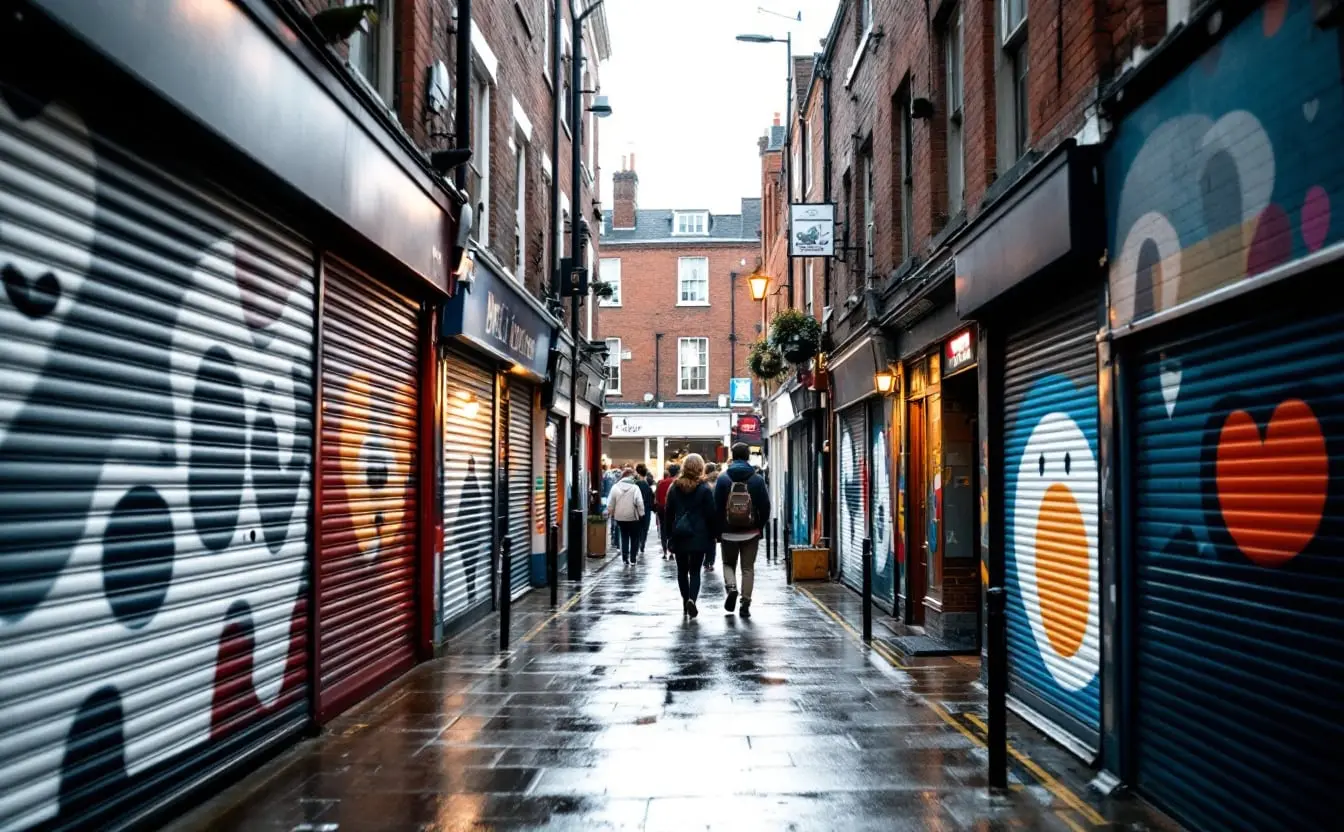
Shoreditch and the streets around Brick Lane change faster than anywhere else on this list. Commissioned walls, paste-ups and small sculptures fixed high on buildings turn over in weeks, which makes repeat visits worthwhile and photographs out of date almost at once. South of the river, the Leake Street tunnel under Waterloo station is a legal graffiti space where you will often find painters at work.
The London street art walk keeps to Shoreditch and Brick Lane. London's distances are the problem rather than its walls: Shoreditch, Leake Street and the central sights sit a long way apart, and on the days you are not walking, a hop-on hop-off bus ticket is one simple way to link them up.
Vienna
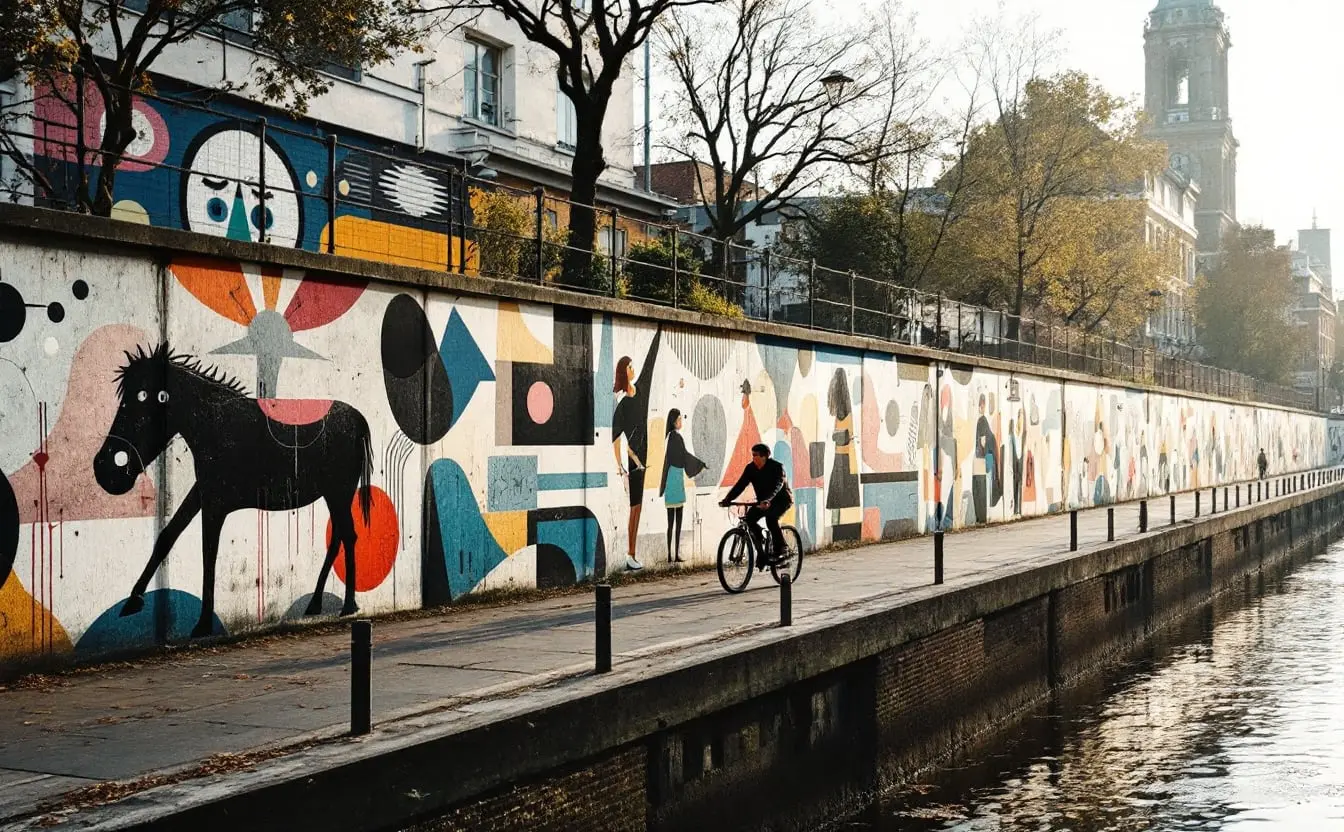
Vienna is not the first city most people name, and that works in its favour. The city runs a programme of legal walls, and the longest and busiest stretch lines the Donaukanal, the arm of the Danube that runs along the edge of the old centre. Painters are at it constantly, so a walk along the canal promenades on a warm evening feels like a slow outdoor show, with the work changing from one visit to the next.
The Vienna street art walk takes in the canal walls. Bring patience rather than a checklist. In Vienna you come for the process as much as for any single wall.
Thessaloniki
The most mixed city of the seven, and the one that most rewards a slow pace. Along the waterfront, public sculpture does the work: George Zongolopoulos's Umbrellas, a group of open umbrellas raised high on slender poles by the sea, is one of the most photographed artworks in the city. From there the route climbs towards Ano Poli, the upper town, where murals and smaller pieces turn up between old houses and stretches of Byzantine wall.
The Thessaloniki street art walk joins the waterfront and Ano Poli. Do the climbing while your legs are fresh, and save the views over the gulf for a rest at the top.
How to choose between them
- Decide what you want to see. Commissioned murals point to Glasgow and Lisbon; a raw, unofficial scene points to Athens and parts of Berlin and London.
- Be honest about your legs. Lisbon and the upper town of Thessaloniki are steep. Vienna's canal and central Glasgow are flat.
- Think about the season. The Vienna canal is at its best on warm evenings, Glasgow works in any weather, and Athens in high summer needs early starts.
- Expect change. In Shoreditch and along the Donaukanal the wall in your saved photograph may already be gone, while the big commissioned murals tend to last longer.
- Add the rest of the city. Every one of these places has museums, food and history that deserve as much of your trip as the walls do.
Four more for a second trip
These cities have no planner in the Atlas, but each is worth a journey of its own. Treat them as the next trip once you have walked one of the seven.
- Bristol: the city most closely associated with Banksy's early work, where Bedminster's walls carry years of painting from the Upfest festival.
- Paris: in the 13th arrondissement, giant murals cover the end walls of tower blocks along Boulevard Vincent Auriol, best seen from Métro line 6, which runs above the street there.
- Łódź: large murals on the end walls of old tenements across the centre, many of them gathered under the Urban Forms gallery.
- Stavanger: the Nuart festival, running since 2001, has left work on walls all over this Norwegian port town.
Whichever city you pick, walk the main route on your first morning and go back to your favourite wall on your last day. In Shoreditch or by the Vienna canal there is a fair chance it will already have changed, and catching that change is half the reason to go.