Art biennials in Southeast Europe, and how to visit one well
Istanbul, Athens, Belgrade and Manifesta's stops in the region: what the big art biennials of Southeast Europe offer, and a step by step way to visit one.

We earn a commission on some bookings and books. As an Amazon Associate I earn from qualifying purchases.
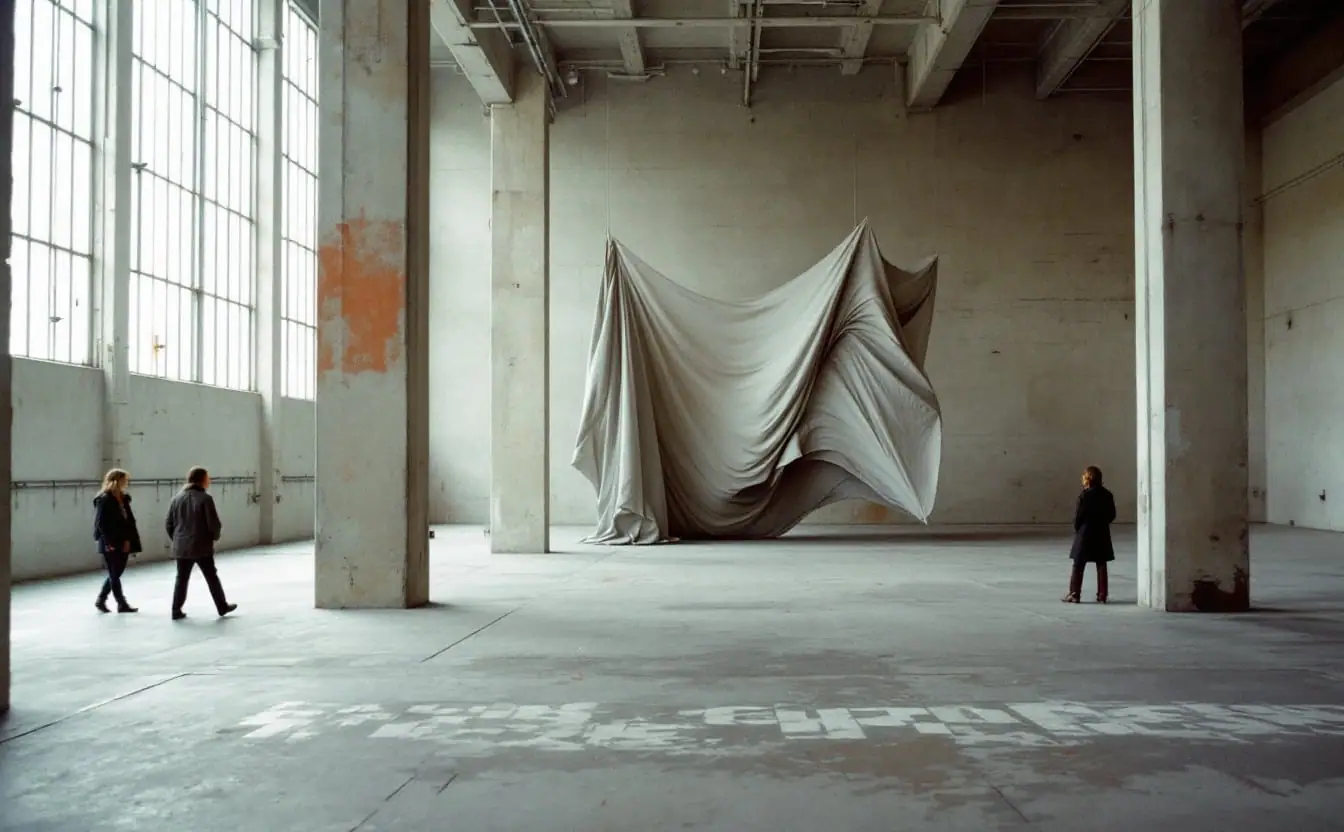
September is when the art calendar in this corner of Europe comes back to life. The heat eases, the ferries on the Bosphorus carry people with folded venue maps, and in more than one city a building that has been shut for years has its doors propped open, with a hand-drawn arrow pointing up the stairwell.
I go to biennials partly for the art and partly for the excuse. A good one drags you through parts of a city you would never otherwise see: a former stock exchange, a hotel without guests, a warehouse on a working waterfront. A bad one leaves you footsore and unsure what you saw. This is a guide to the big recurring exhibitions of Southeast Europe, and to visiting one so that you come home with the first experience rather than the second.
What a biennial is, and why this region does it differently
The model comes from Venice, whose exhibition began in 1895 and grew into a show of national pavilions. Most biennials since then have dropped the pavilions and kept the rhythm: a large exhibition every two years, built around a curator or a curatorial team, a title, and a theme loose enough to hold a hundred artists.
In Southeast Europe the format has its own flavour. Few of these events have a permanent home of the Venetian kind, so they borrow buildings, and the choice of building is often the most memorable part of an edition. Budgets are smaller and less certain, which means dates and rhythms can shift. And because many host cities have spent decades being described from outside, every edition carries an argument about who the exhibition is for: the city's own public, or the international art crowd who fly in for the opening week.
Istanbul: the long runner
The Istanbul Biennial, organised by the Istanbul Foundation for Culture and Arts (İKSV), has been running since 1987, which makes it the senior event in the region. It usually opens in September and stays up for around two months. Early editions used the Byzantine church of Hagia Irene in the outer courtyard of Topkapı Palace. Later ones moved into warehouses on the Karaköy waterfront, school buildings, apartments and, on occasion, houses on the Princes' Islands.
Istanbul rewards planning more than any other city on this list. Venues are often spread across both banks of the Golden Horn and sometimes across the Bosphorus, and distances that look short on a map can take an hour in traffic. Treat the ferries as part of the visit. The crossing between Karaköy and Kadıköy gives you twenty minutes of sea air between two dense rooms of art, and it does more for your concentration than another coffee.
Athens: a biennale in borrowed buildings
The Athens Biennale held its first edition in 2007, and from the start it made a habit of moving into places the city had stopped using. One edition filled the former Athens Stock Exchange. Another took over the Bageion, a nineteenth-century hotel by Ernst Ziller on Omonia Square that had stood empty for years. Its rhythm has been irregular, tied more closely to the city's fortunes than to a strict two-year clock, so check each time whether an edition is actually on.
Athens also hosted half of documenta 14 in 2017, when the Kassel exhibition, which normally comes round every five years, split itself between the two cities. It used venues across Athens, including the National Museum of Contemporary Art in the former Fix brewery on Syngrou Avenue, which had not yet fully opened, and the Athens Conservatoire. Athenians argued for a long time afterwards about whether the city had been a host or a backdrop, and that argument is part of what makes art events here worth the trip. Whatever you come to see, leave a day for the walls as well; I wrote a walk through street art and empty buildings in central Athens for exactly that purpose.
Belgrade: the October Salon
Belgrade's October Salon began in 1960 as an annual exhibition of the city's artists, organised by the Cultural Centre of Belgrade, and it is named for the month in which it traditionally opens. In the 2000s it opened its doors to artists from abroad. Since then it has grown into an international exhibition shaped by invited curators and spread across galleries and borrowed spaces in the centre.
Pair it with the Museum of Contemporary Art at Ušće, a modernist building of white stone and glass on the riverbank where the Sava meets the Danube, facing the fortress across the water. It reopened in 2017 after a renovation that kept it closed for about a decade, and its collection of Yugoslav art gives useful context for whatever the Salon is arguing about. The walk over Branko's Bridge to reach it is one of the better approaches to any museum in the region.
Manifesta: the nomad that sometimes stops here
Manifesta, the European nomadic biennial, began in Rotterdam in 1996 and moves to a different city for each edition. Its visits to this region have been few but telling. Ljubljana hosted the third edition in 2000. An edition planned for Nicosia in 2006 was cancelled before it opened, after disputes over how it would work across the divided city. In 2022 the fourteenth edition went to Prishtina, where the Grand Hotel, a Yugoslav-era tower in the centre, became one of its main venues.
What Manifesta brings is a method as much as an exhibition. Its editions start from the host city, its buildings, its planning fights and its unfinished business, and then invite artists to respond. That makes even past editions good teachers. If you never manage to see one, the catalogue of an old edition can still be a way into a city's arguments that no tourist guide offers.
Older, smaller and closer to the ground
Not every major event here is a contemporary art biennial in the Venetian mould. The Ljubljana Biennial of Graphic Arts, founded in 1955, is one of the oldest exhibitions of its kind anywhere, run by the International Centre of Graphic Arts from Tivoli Mansion at the edge of Tivoli Park. Thessaloniki has its own biennale of contemporary art, and Bucharest has run one too.
These smaller events can be a relief. You can see everything in a weekend, talk to the people who organised it, and still have time to sit in a park. They are also where you are most likely to meet local artists rather than the international circuit.
How to visit a biennial well
Big exhibitions are built to be too much. Nobody sees all of one, and the people who try usually remember least. This is the routine I have settled into.
- Choose your week. Opening days bring talks, performances and parties, along with crowds and queues. The middle weeks are calmer. Decide which you want before you book anything.
- Read the venue map before the curatorial essay. Group the venues by neighbourhood and plan one cluster per half day. The essay will make more sense once you have seen some of the work.
- Find the long pieces. Films, multi-screen installations and performances have running times. Note them, and give the two or three that interest you most their full length rather than catching five minutes of ten.
- Check closing days and booking rules. Venues often share a weekly closing day, and some performances and tours need booking. Two minutes on the official site can save you a wasted crossing of the city.
- Use the public programme. Walks, talks and screenings are often where an edition explains itself most clearly, and they are a good way to hear local voices rather than only the curators.
- Talk to the mediators. The people sitting by the door in each room usually know the work far better than the wall text does. Ask them what visitors tend to miss.
- Look at the building. Ask why the curators chose it, what it was before and what it will be once the exhibition leaves. The answer often tells you more than the theme.
- Eat near the venues. Stay in the neighbourhood rather than retreating to your hotel district, and spend money where the exhibition is asking residents to put up with crowds.
- Leave gaps. Two strong venues a day is plenty. Walk between them when you can, because the streets in between are part of what the curators chose.
- Go back once. On your last day, return to the work that annoyed or puzzled you most. It is usually the one you remember.
If you are on the other side of the fence and organising something yourself, the logistics overlap a great deal with planning a festival in public space, from permits to toilets. More on the region's events lives in the festivals and events strand.
What the city keeps
When the last visitors leave, the temporary walls come down, the borrowed building is locked again, and the city goes back to its own problems. What remains varies. Sometimes a forgotten building re-enters public life, at least in conversation, and occasionally a new use follows. Sometimes a neighbourhood learns it has become fashionable, with the rent rises that follow.
The quieter legacy is the residents who crossed their own city to stand inside a room they had walked past for twenty years. So keep the venue map. Folded in a drawer, it becomes a list of doors that opened for a few weeks and then closed again, and years later it reads like an inventory of the buildings a city forgot it had.