Lisbon's azulejos: tiles as public art on streets, stations and walls
Lisbon's azulejos read as public art: how the tile tradition grew, where to see it on facades, viewpoints and metro stations, and what never to buy.

We earn a commission on some bookings.
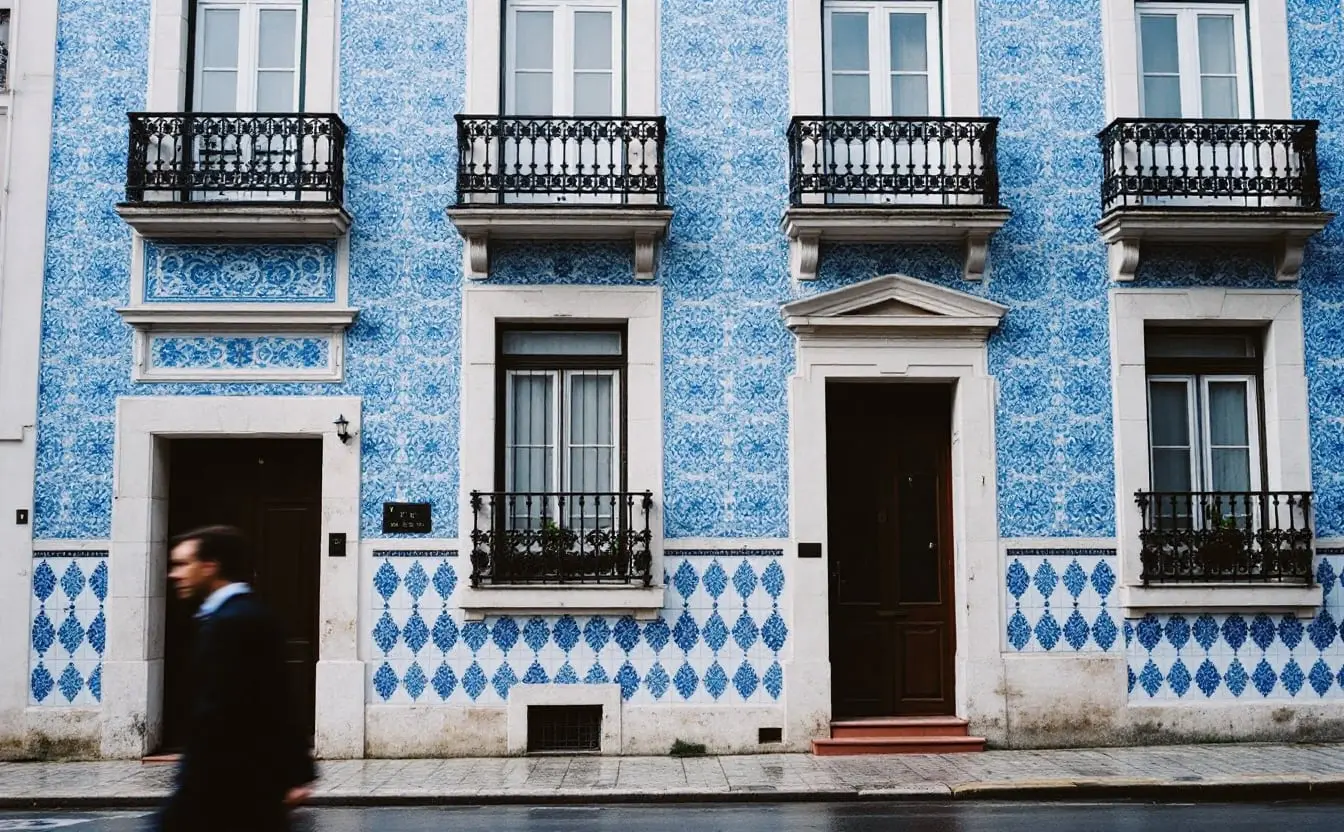
After rain, Lisbon's streets do something that brick cities like mine never manage: the walls shine. Whole house fronts in Alfama, Graça and Mouraria are clad in glazed tiles, and when the clouds break over the Tagus the wet surfaces throw the light back into the street in blue and white, green and ochre, patterned like wallpaper turned inside out. I live in the Ruhr, where the public art of the last century was made from steel and slag. I can think of no other city where decoration and weatherproofing are so thoroughly the same thing.
Azulejos usually get filed under craft or architecture. I think they belong just as much with public art. They face the street, someone chose them to be seen by everyone, and they have carried pictures, patterns and messages in the city's view for five hundred years. This piece reads them that way: on house fronts, at viewpoints, in cloisters and deep under the city in the metro. It pairs well with our Lisbon street art walk, because in Lisbon the newest painted walls keep borrowing from the oldest glazed ones.
A history you can see from the pavement
The word comes from Arabic, from a term for a small polished stone, and has nothing to do with azul, the Portuguese for blue, however neatly the two seem to fit. The first tiles in Portuguese buildings were imported from Seville in the early sixteenth century, geometric patterns in the Hispano-Moorish tradition. Later in that century the majolica technique, painting directly onto a white tin glaze, reached Portugal, and Lisbon workshops began making their own. Everything after that is a run of fashions, and nearly all of them survive somewhere in the city.
| Period | What to look for | Where to start looking |
|---|---|---|
| 1500s | Geometric patterns, then the first painted tiles | The early rooms of the National Tile Museum |
| 1600s | Repeating multicoloured "carpet" patterns covering whole walls | Church interiors and the museum |
| Late 1600s to 1700s | Large blue and white figurative panels: saints, hunts, fables, city views | The cloisters of São Vicente de Fora, the Santa Luzia viewpoint |
| After 1755 | Simpler patterned tiles made in quantity for rebuilt houses | The museum, and entrance halls glimpsed through open doors |
| 1800s | Tiles move outdoors and cover entire facades | Alfama, Graça, Mouraria, Largo do Intendente |
| 1950s onwards | Modern artists design tiles for the metro and public buildings | The older metro stations, Cidade Universitária |
| Today | Artists rework tile patterns in murals and installations | The walls on the Lisbon walk |
Two turns in that story matter most for anyone walking the streets. The first is the earthquake of 1 November 1755, which, with the fire and the waves that followed, destroyed much of the lower city. Rebuilding under the Marquis of Pombal needed decoration in quantity and at speed, and the Royal Factory at Rato, founded in 1767, was among the workshops that supplied simple patterned tiles for the new houses.
The second is the nineteenth century, when tiles moved outside. Facades covered from pavement to cornice became ordinary rather than grand, a fashion often linked to Portuguese returning from Brazil, where tiled fronts had proved themselves against heat and rain. Industrial methods made the tiles cheaper, and whole streets were clad. That is the Lisbon most visitors photograph without quite noticing why it looks the way it does.
Five places to start
The Santa Luzia viewpoint
The terrace beside the little church of Santa Luzia, on the climb from the cathedral towards the castle, is one of the busiest viewpoints in the city. Turn your back on the roofs of Alfama for a moment and look at the church wall. Its tile panels include a view of the great riverside square, Praça do Comércio, as it was before 1755, and a scene of the twelfth-century siege of the castle. You are looking at a lost city in the medium that survived it. Come early if you want the panels without a crowd in front of them.
São Vicente de Fora
The monastery of São Vicente de Fora, east of Alfama, holds one of the great collections of eighteenth-century blue and white panels in its cloisters and corridors, including a series based on La Fontaine's fables. It is a ticketed visit, and worth it for the fables alone: foxes, crows and frogs drawn with real wit, at a scale you can read from across a corridor.
Largo do Intendente and the old streets
For facades, walk. Mouraria and Graça are steep, residential and thick with tiled fronts, many of them nineteenth-century patterns repeated from one house to the next with small variations. On Largo do Intendente, the former Viúva Lamego tile works shows off the factory's own product across its front. Look at the square as a whole, too. It is a good example of tiles giving a plain building a public face.
The National Tile Museum
The Museu Nacional do Azulejo occupies the former convent of Madre de Deus, east of the centre and a short bus or taxi ride from the Baixa. It is the one place where the whole sequence in the table sits under one roof, from early geometric tiles to twentieth-century designs. Its best-known piece is a long blue and white panorama of the Lisbon waterfront made before the earthquake, and the convent church, with its gilded woodwork, is a shock of gold after all that blue. Check opening days before you go.
Under the city
The Lisbon metro opened in 1959, and the painter Maria Keil designed tile panels for many of its first stations: abstract, geometric, cheerful and easy to clean, which is exactly what a busy underground wall needs. Later stations brought in other well-known artists, among them Maria Helena Vieira da Silva, whose designs line Cidade Universitária. A day ticket and an hour of getting off at stations purely to look is one of the easiest art outings in Europe.
How to read a tiled facade
Once you start looking, the street turns into a reading exercise. A short checklist for the first walk:
- Find the repeat: many patterns need four tiles to complete one motif, and some need sixteen.
- Follow the borders: narrow border tiles frame doors, windows and the line under the eaves, and often differ from the main field.
- Watch the side light: some nineteenth-century tiles are in relief, with raised patterns that only show when the sun is low.
- Notice the colour: blue and white is the classic, but green, yellow and a purplish brown turn up often on older houses.
- Spot the patches: mismatched tiles, blank white squares or a smear of cement mark where tiles fell, were repaired or were taken.
- Look up: upper storeys often keep their tiles long after the ground floor has lost them.
When street art meets the tile
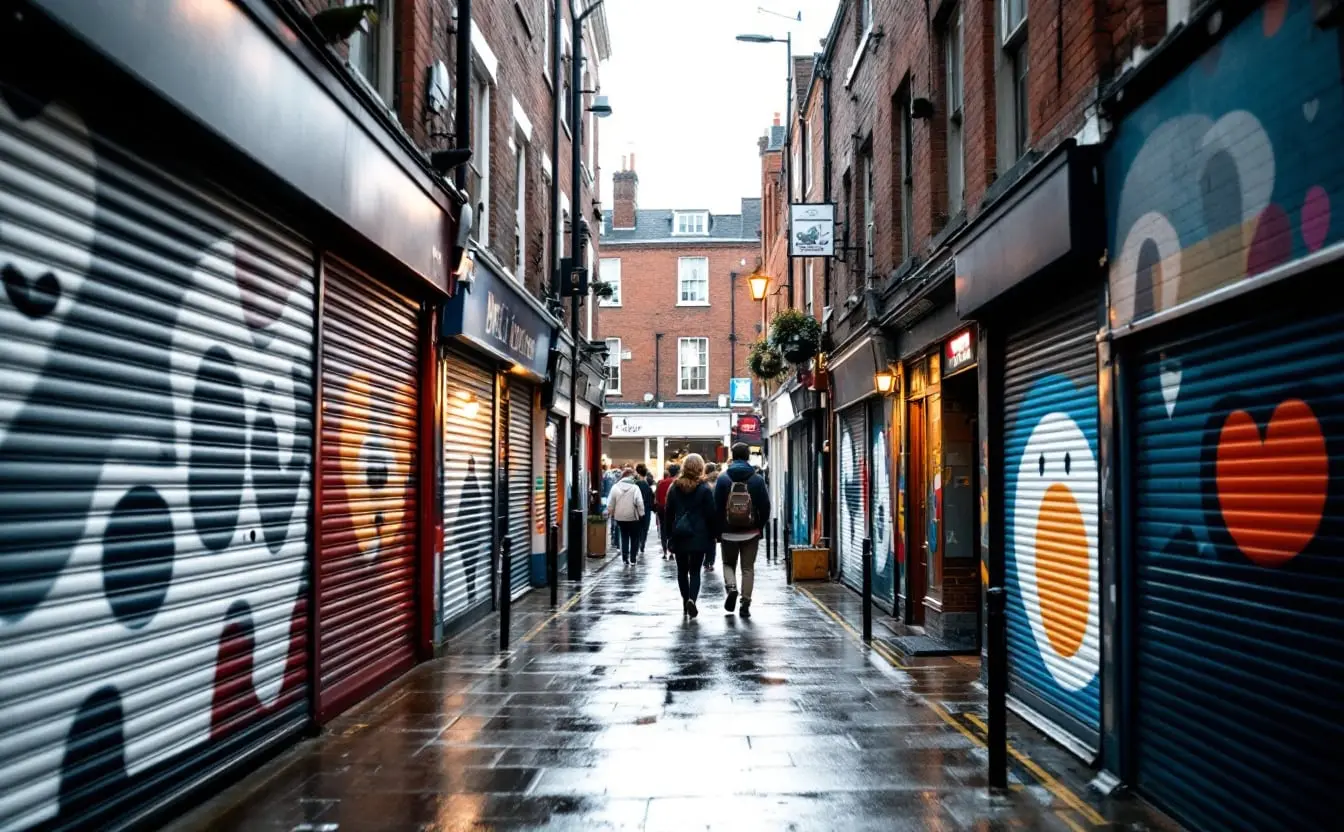
Lisbon's street artists grew up among these walls, and it shows. Add Fuel, the artist Diogo Machado, builds murals and installations out of what look at first like traditional tile patterns, then hides characters and odd details inside them. Others paint mock tiles onto plain render, complete with chipped corners. The city council set up its own street art office, the Galeria de Arte Urbana, in 2008, and the panels it runs beside the Glória funicular are a good place to see how the newest painted work keeps talking back to the oldest glazed surfaces.
Theft, repair and what not to buy
Old tiles are valuable and, on a neglected building, not hard to prise loose. Theft from facades, churches and empty palaces was a serious problem for years, and SOS Azulejo, a campaign started in 2007 by the museum of Portugal's criminal police, works to record stolen tiles and get them back. The city has also tightened its building rules so that tiled facades cannot simply be stripped during renovation. Repair raises its own questions: whether to fill a gap with a copy, a blank or a clearly modern tile is the same argument Berlin had when artists repainted their own work on the East Side Gallery.
For visitors the rule is simple. Do not buy old loose tiles from a stall or flea market unless the seller can show where they came from. Buy new ones from workshops that make reproductions or contemporary designs, and leave the old ones on the walls where they belong.
Practical notes
Glazed tiles are mirrors in hard sun, so overcast days and the hour before sunset are kinder for photographs; after a shower is best of all. The tiled neighbourhoods are steep, with stairs where you expect streets, and the city's lifts and funiculars are part of getting around, as our piece on stairs, bridges and shortcuts describes. These are homes, not museum walls. Keep doorways clear, do not lean on the tiles, and photograph from the street rather than through windows.
The places above are spread across the city, from Alfama to the museum in the east and out to the walls on the street art walk. If you only have a weekend and the hills are winning, a hop-on hop-off bus is a straightforward way to link the far-apart districts and save your knees for the stairs.
Then go back to one street you liked and wait for the weather. When the next shower passes and the sun comes out low over the river, the tiles light up one house after another, and the whole street looks freshly painted, though nothing on it has changed in a century.