How to plan a self-guided street art walk in any city
A method for planning your own street art walk in any city: finding walls, checking they still exist, ordering the stops and walking with respect.

We earn a commission on some bookings and books. As an Amazon Associate I earn from qualifying purchases.
Street art is the one kind of public art that arrives with an expiry date. A wall that drew crowds in spring can be rolled over in grey by autumn, and a shop shutter that carried a portrait one month may carry nothing but a padlock the next. That is half the pleasure. It is also why so many street art routes copied from old blog posts lead people to blank walls.
A good walk is a route, not a list. It needs an order that makes sense on foot, a mix of things that last and things that might not, places to pause, and an idea of where the light will fall. The method below works in every city I know, from a canal bank in Vienna to a hillside in Lisbon. It is also the thinking behind the Atlas walk planners on this site, and I will point to them as I go.
Decide what the walk is for
Before you open a map, decide what kind of walk you want. A walk built around one festival district is different from a walk that follows a single artist across a city, and both differ from a general wander through the neighbourhoods where painting happens. Some people want large commissioned murals they can photograph from across the street. Others want the small, quick work: stencils, paste-ups, stickers on drainpipes, the lettering of writers who never sign their real names.
Neither is better, but mixing them without thinking produces a muddle. A walk of big murals can cover more ground, because each stop is visible from a distance. A walk of small work needs a tight area and slow feet. Pick one as the backbone and let the other turn up on the way.
Anchor the walk on what lasts
Every street art route has two layers. The durable layer is made of legal walls where painting is allowed, festival walls that a building owner has agreed to keep, commissioned or protected murals, galleries, museums, public sculpture and streets that have been known for art over many years. The fast layer is everything else, including the new work that appears on the legal walls week after week.
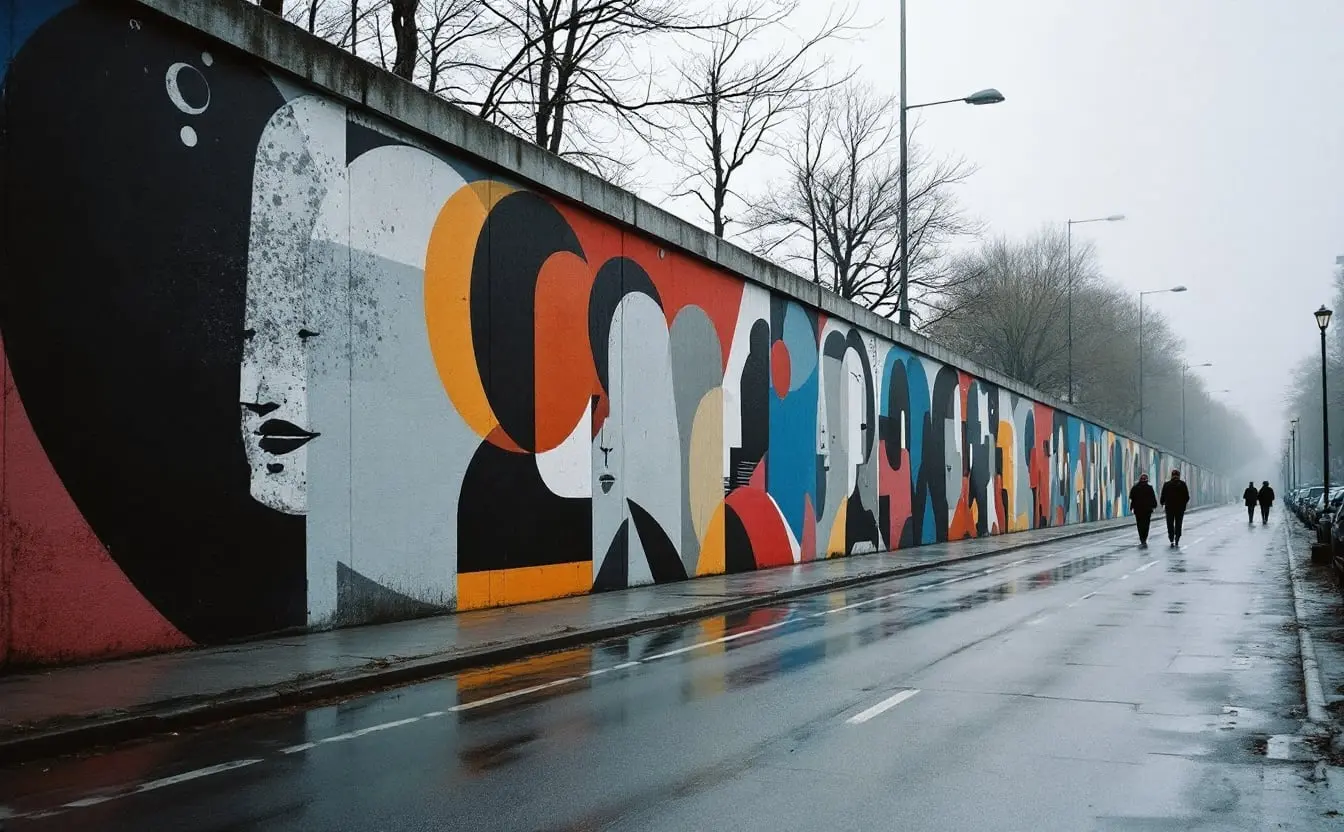
Build the skeleton from the durable layer and let the fast layer fill the gaps. If half your stops are durable, the walk still works on a day when the rest has been painted over. In Berlin the Friedrichshain and Kreuzberg walk hangs on the East Side Gallery, a long stretch of the Wall painted in 1990 and restored since, while the side streets supply whatever is new.
Find candidates before you go
Spend an evening collecting more stops than you need, perhaps fifteen to twenty for a half-day walk. Good sources, roughly in order of reliability:
- The city's own culture or tourism pages, which often list commissioned murals and legal walls.
- Festival archives. Mural festivals usually publish maps of the walls they have painted, with artists and years.
- Museum and gallery websites, for anything with a street address and a door.
- Crowd-sourced street art maps and photo sites. Useful for recent work, but check the date on every picture.
- Street-level imagery in map apps. Treat it as evidence about the wall, not the painting, because the pictures can be years old.
The question for every candidate is the same: when was it last seen, and by whom? A photograph from the past few weeks beats a famous image from a decade ago.
The method, step by step
- Choose one connected part of the city. Two neighbouring districts are fine; three separated by a ring road are not. Cross rivers and railways only where there is an easy bridge or underpass.
- Mark every candidate on a map and look at the shape. Clusters tell you where to go. A lone stop far from the rest usually gets cut.
- Verify each one. Look for a recent photo, check whether the building has been renovated or wrapped in scaffolding, and confirm that galleries still exist.
- Cut to eight to twelve stops. Fewer feels thin; more turns a walk into a march.
- Put them in order without zigzags, starting at a station or tram stop and ending somewhere you can sit down, eat or get home from easily.
- Give each stop a look time: five minutes for a single piece, twenty to forty for a long wall or a gallery.
- Add the pauses: a café, a bench, a public toilet, somewhere to shelter if it rains.
- Check the light and decide whether the route runs better in the morning or the afternoon.
- Save it offline, with street addresses, so a weak signal does not end the walk.
- Leave slack. The best thing you see may not be on your list.
The Atlas planners do steps 4 to 6 for you: untick a stop and the distance and time adjust. The Athens walk groups its stops by neighbourhood, so on a hot afternoon you can drop a whole area and still have a route that hangs together.
Read the light and the ground
Murals are paintings on buildings, and buildings face somewhere. A wall facing east is at its best in the morning and in shadow by lunch; a west-facing wall glows late in the day. In northern Europe in winter the sun stays low and a narrow street may get no direct light at all. That is not a disaster. An overcast sky gives even colour without hard shadows, and murals often photograph better under it.
Hills change the plan as well. In Lisbon it pays to start high and walk down, using the funiculars and lifts as part of the route rather than as detours, and the Lisbon planner is laid out with that in mind. Rain is less of a problem than people expect, provided the route has a covered stretch, an arcade or a gallery somewhere in the middle.
A planning sheet
I keep a small table for each walk. It takes ten minutes to fill in and saves an hour of wandering.
| Stop | Kind | Why it is on the route | Look time | Wall faces | Fallback nearby |
|---|---|---|---|---|---|
| Legal wall by the river | wall | changes often, always something new | 20 min | west | bench and café on the bank |
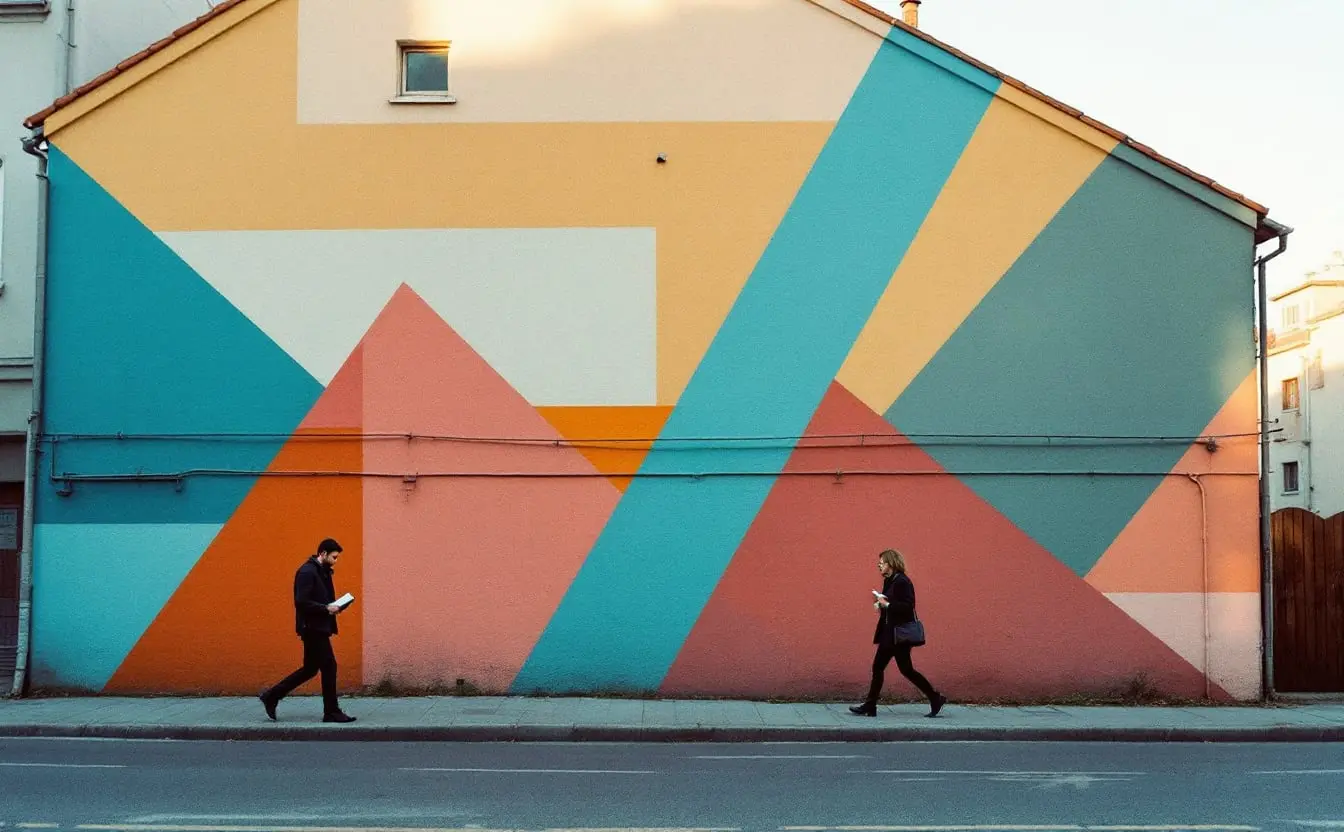
| Commissioned gable mural | mural | festival wall kept by the owner | 10 min | south | side street with paste-ups |
| Small contemporary gallery | gallery | indoor stop, check before you go | 30 min | n/a | covered market |
| Underpass with stencils | street | fast layer, may be gone | 5 min | n/a | skip if painted over |
| Sculpture in a square | sculpture | durable, a good place to rest | 10 min | n/a | public toilet on the square |
The last column is the useful one. When a stop has vanished, you already know what to do instead, without standing on a corner scrolling.
Learn from routes that already work
Glasgow's city centre mural trail is a good model of the durable layer done well: large commissioned walls on gable ends and the sides of buildings, close enough together to walk between in a morning. The Glasgow mural trail planner lets you choose a section rather than attempting the whole trail at once, which is how most visitors should take it.
My own city works the other way round. In Vienna the walls along the Donaukanal include stretches where painting is permitted, so the work there changes constantly and the route matters more than any single piece. The Vienna walk gives those canal walls their due and treats each stretch as a gallery that rehangs itself. In any city, look for that kind of place: a legal wall, a riverbank, a festival quarter, somewhere the fast layer is allowed to live in daylight.
Walk with respect
Street art happens where people live and work. A good walk leaves no trace except the coffee you bought on the way.
- Photograph walls, not residents. If someone is standing in their own doorway, wait or move on.
- Keep doorways, driveways and shop entrances clear, especially in narrow streets.
- Do not climb onto roofs, enter private courtyards or step onto railway land for a better angle.
- Never peel or touch paste-ups, and stay clear of wet paint on a legal wall where someone is working.
- Keep groups small and voices low in residential streets, early and late.
- Credit artists by name when you share photos, if you know the name.
Keep a record
Write the date on everything. A walk notebook with the date, the stops and a line about each one becomes more valuable every year, because it holds a layer of the city that will not be there next time. Some people draw instead of photographing, and a few quick lines in a small sketchbook make you look at a wall for longer than any camera does.
At the end of the walk, sit down near the last stop and mark on your map the one wall you would show a friend. Next time you are in that city, go there first and see what has happened to it.