Belfast's murals: a guide to seeing them with care and context
How Belfast's murals began, what they show on both sides of the peace lines, where to find them, and how to walk residential streets with care and respect.

We earn a commission on some bookings.
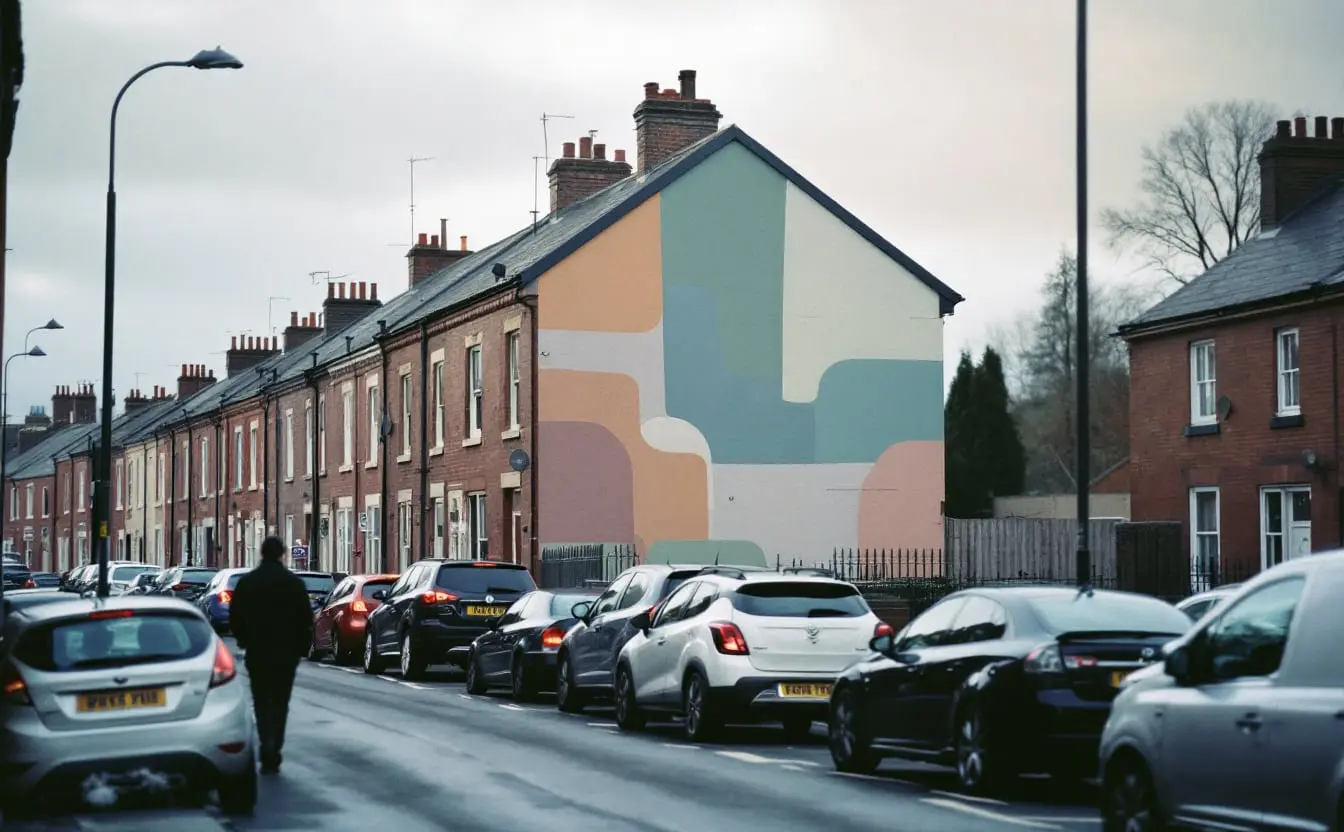
In most cities a mural is something you visit. In Belfast it is often something people live beside. The best-known walls are the gable ends of terraced houses, a few steps from someone's front door, and many of them name people who died within walking distance of where you stand. For visitors they are one of the most striking sights in Europe. For residents they are memorials, statements, arguments and, on an ordinary Tuesday, simply the end of the street.
The conflict behind many of these walls, known as the Troubles, killed more than 3,500 people, and Belfast saw a great many of those deaths. Families on every side still carry the losses. I come to these streets as an outsider from another city with painted walls and a long political memory, and that is the spirit of this guide: to explain what you are looking at, where to find it and how to behave, without taking sides.
The background, briefly
The Troubles are usually dated from the late 1960s to the Good Friday Agreement of 1998, which is also called the Belfast Agreement. Broadly, the conflict was between people who wanted Northern Ireland to remain part of the United Kingdom, known as unionists and mostly from a Protestant background, and people who wanted a united Ireland, known as nationalists and mostly from a Catholic background. Loyalist and republican describe the more hardline traditions within each community, including their paramilitary groups. Republican and loyalist paramilitaries and the state's security forces were all responsible for deaths, and a large share of those killed were civilians.
Even the vocabulary is sensitive here, and people often use different names for the same place or event. This guide uses the terms each community generally uses for itself. When you are in doubt in conversation, listen first and follow the lead of the person you are talking to.
How the murals began
The unionist tradition is the older one. Belfast's first known mural, painted in 1908, showed King William III on a white horse at the Battle of the Boyne in 1690, and for decades murals in unionist districts mostly repeated that image, freshened up each year for the Twelfth of July celebrations.
Republican murals came later and suddenly. In 1981, during the hunger strikes in which ten republican prisoners died, nationalist and republican districts began painting walls for the first time, at first about the hunger strikers and their demands.
Through the 1980s and 1990s both traditions painted widely. Walls carried commemorations of the dead and scenes from history, such as the Battle of the Somme in 1916 for loyalists and the Easter Rising of the same year for republicans. They also carried statements of cultural identity, from the Irish language to Ulster Scots heritage. On both sides there were paramilitary murals, including images of masked, armed men, which many residents found intimidating and which visitors still encounter on some walls.
What changed after the agreement
Peace did not wipe the walls, but it changed what went on them. In 2006 the Arts Council of Northern Ireland launched a programme called Re-imaging Communities, which funded neighbourhoods across Northern Ireland to replace sectarian and paramilitary imagery with subjects residents chose themselves: local history, sport, music, famous sons and daughters. Some walls changed; others did not, and debate continues within both communities about whether particular murals are intimidation, history or simply part of who lives there.
Newer subjects tell other Belfast stories. Shipbuilding, and the Titanic launched from a Belfast yard in 1911, turns up on walls and in public art. The footballer George Best and the writer C.S. Lewis, both born in Belfast, are remembered in the east of the city, where C.S. Lewis Square has sculptures drawn from the Narnia books.
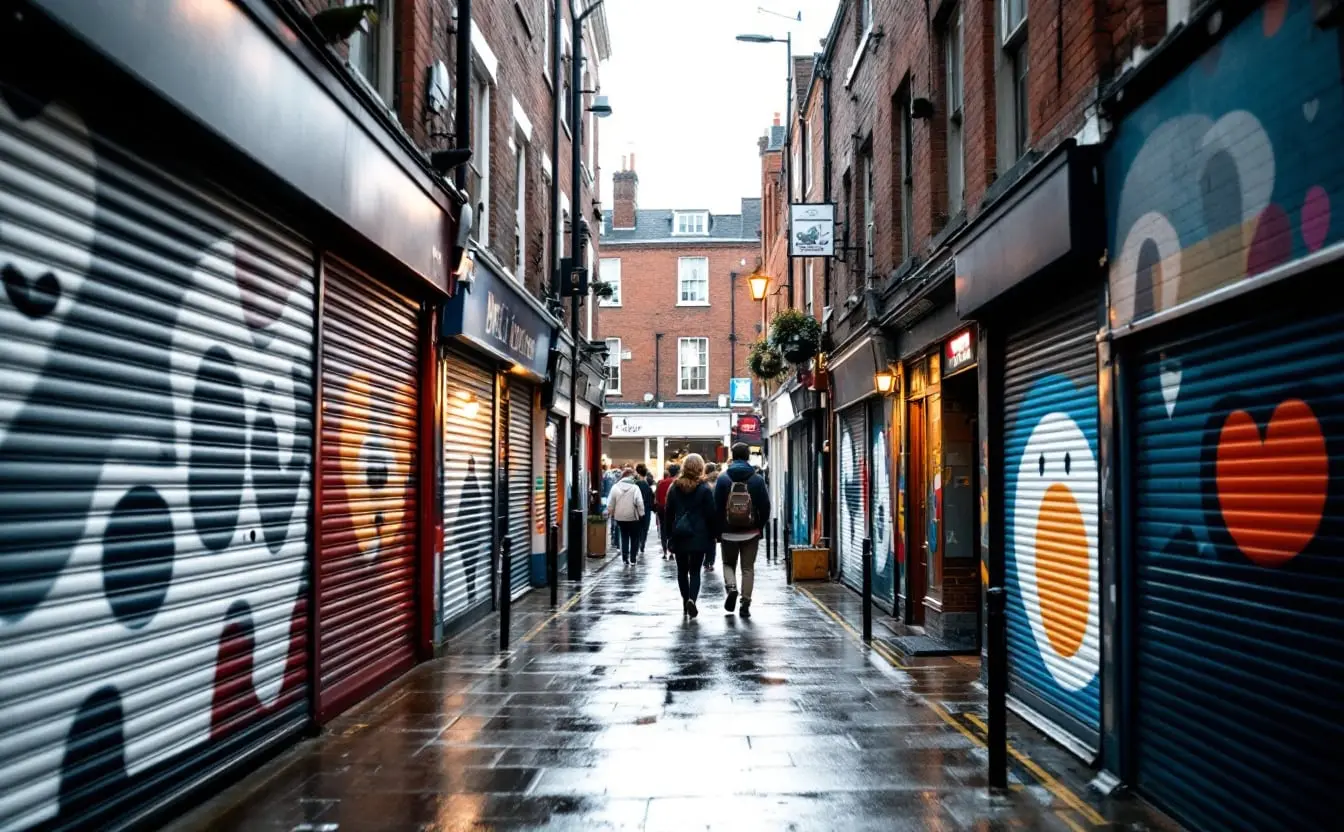
In the city centre, the Hit the North festival has been painting walls around North Street and the Cathedral Quarter for more than a decade, with street art that has nothing to do with the conflict. It is the same kind of event as those in mural festivals worth travelling for, and the city centre walls fit the categories in street art vs graffiti far more neatly than the gable ends of the west.
Where to look
| Area | What you are likely to see | A note for visitors |
|---|---|---|
| West Belfast, around the Falls Road | Nationalist and republican murals, memorials, Irish language, the International Wall on Divis Street with murals about causes around the world | Residential streets and memorial gardens; keep voices low |
| West Belfast, around the Shankill Road | Unionist and loyalist murals, memorials, history such as the Somme, Ulster Scots themes | Residential streets and memorial gardens; keep voices low |
| The peace line between them | A tall barrier where visitors have written messages for years | Some gates in the peace walls still close in the evening |
| East Belfast, around the Newtownards Road | Loyalist murals, shipyard history, local figures; C.S. Lewis Square nearby | Fewer visitors, so be especially discreet |
| City centre and Cathedral Quarter | Contemporary street art and festival walls | The easiest place to linger with a camera |
North Belfast has murals too, in a patchwork of neighbourhoods where communities meet at many interfaces. It sees few visitors, and it is better seen with a local guide than on your own.
Seeing them with care
These habits matter more here than on almost any other street art walk I could suggest. Most are common sense, but in Belfast common sense carries extra weight.
- Remember that these are homes. Stay on the pavement, keep clear of doors, drives and gates, and do not sit on garden walls.
- Photograph walls, not people. Ask before including anyone in a picture, and do not photograph children.
- Treat memorials as memorials. Many murals and small gardens list the names of the dead. No playful poses, and no selfies with images of weapons.
- Leave no mark. Never write on murals or houses. Tour groups often add messages to the peace wall, and it has become a custom, but it is not one you need to join.
- Keep your politics to yourself. If a resident chooses to talk to you, listen far more than you speak, and do not argue.
- Dress plainly. Some football shirts, colours and symbols are read as statements in Belfast.
- Mind the calendar. Around the Eleventh Night bonfires and the Twelfth of July parades, and around bonfires in some nationalist areas in August, tensions can rise. Check local news, and remember that parades are community events, not shows for visitors.
- Spend money on both sides: cafés, shops and community-run centres all depend on local trade.
The same instincts apply at any site of painful memory. I wrote about them for the Yugoslav memorial parks in visiting the spomeniks, and they travel well.
Ways to see the murals
On foot, the Falls Road and the Shankill Road are close to each other, separated by the peace line, and a walk can take in both. Plan where you will cross, allow for the gates that close in the evening, and use the method in planning your own street art walk to decide what to see rather than trying to see everything.
Black taxi tours are a long-standing Belfast tradition. A driver takes a small group to murals in different areas and talks as you go. Many drivers grew up with the conflict, and their commentary reflects their own experience, which is part of the value; when you book, ask how a tour presents both communities. Guided walking tours are another option, including some led by people from each community who lived through the Troubles. Some visitors take one on each side to hear both accounts, and in my view that is the best way to do it.
To get your bearings in a city you do not know, a hop-on hop-off sightseeing bus is a gentle start: a bus, usually open-topped, that runs a fixed loop of stops, where you can get off and rejoin later on the same ticket. Use it to understand how the city fits together, then go back to the neighbourhoods on foot.
Two short questions
Are the murals political?
Many are, and that is the point of them for the people who painted them. Others are about sport, industry, literature or local history, and city centre street art is mostly free of the conflict. Look at each wall on its own terms, and resist reading the whole city through one image.
Can I visit both sides in a day?
Yes. West Belfast is compact, and a few hours on foot covers plenty. Leave time to sit somewhere afterwards, because the walls carry a lot and they stay with you.
On a quiet weekday afternoon you may see someone on a stepladder touching up the edge of a mural, or a resident sweeping a doorstep beneath a wall that lists the dead. Both are looking after something. Lower your camera for a minute and let them get on with it.