Mural and street art festivals in Europe worth travelling for
Nine mural and street art festivals across Europe that keep coming back, from Stavanger to Zaragoza, with what each is like and how to plan a trip around one.

We earn a commission on some bookings and books. As an Amazon Associate I earn from qualifying purchases.
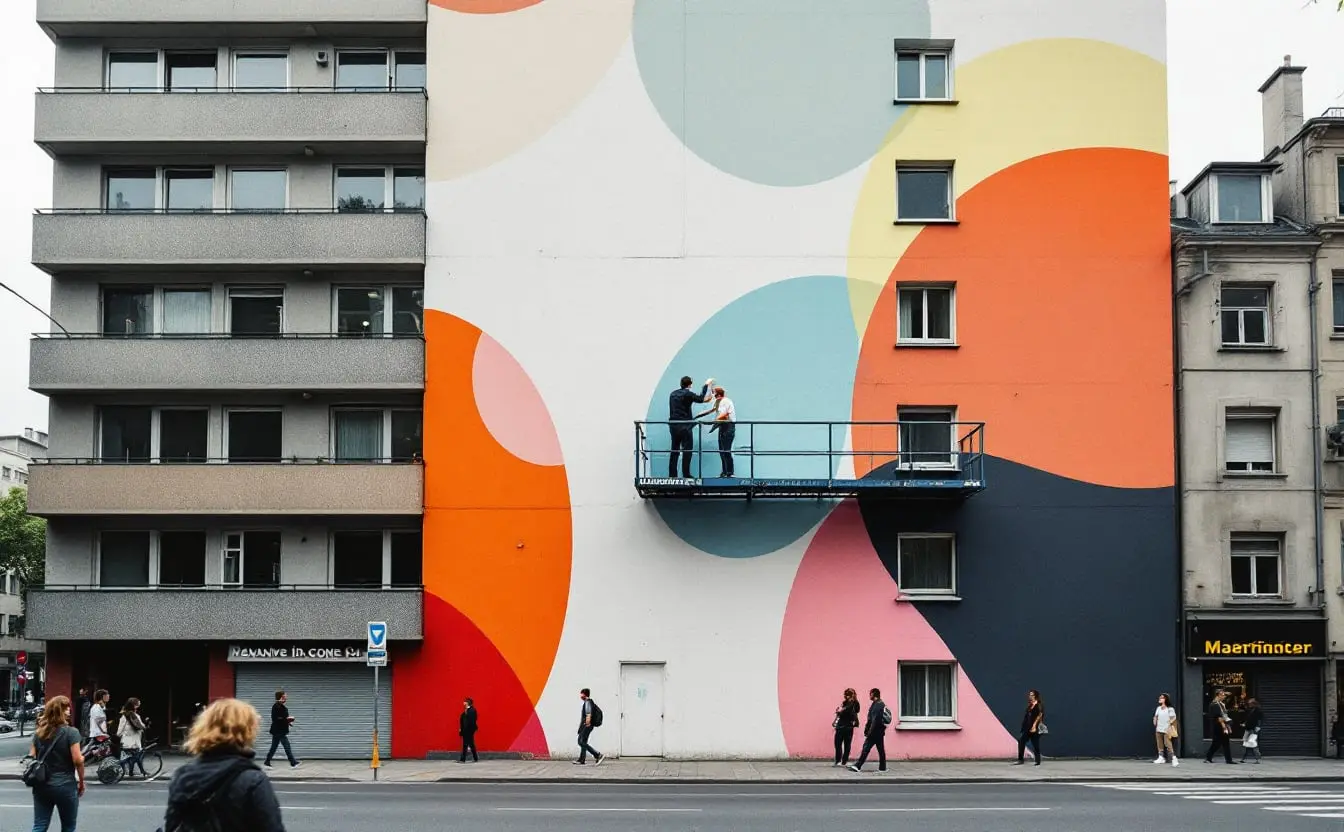
The best thing about a mural festival is watching a wall change its mind. On the first morning it is grey primer and a few chalk lines. By the third day there is a shape you can almost name, and by the end of the week the neighbours have opinions. I have spent more festival afternoons than I can count standing at the edge of a cordon with a coffee, watching someone on a lift decide where a shadow goes.
Few of the festivals I would cross a continent for are in my own corner of Europe. In Athens the big walls tend to come from single commissions and self-organised jams rather than a long-running event, so I travel north and west for this. Below are nine festivals that have been coming back for years, described in general terms. Formats, dates and artists change from one edition to the next, and some events now run every other year, so treat each festival's own website as the only reliable source before you book anything.
What you are actually travelling to
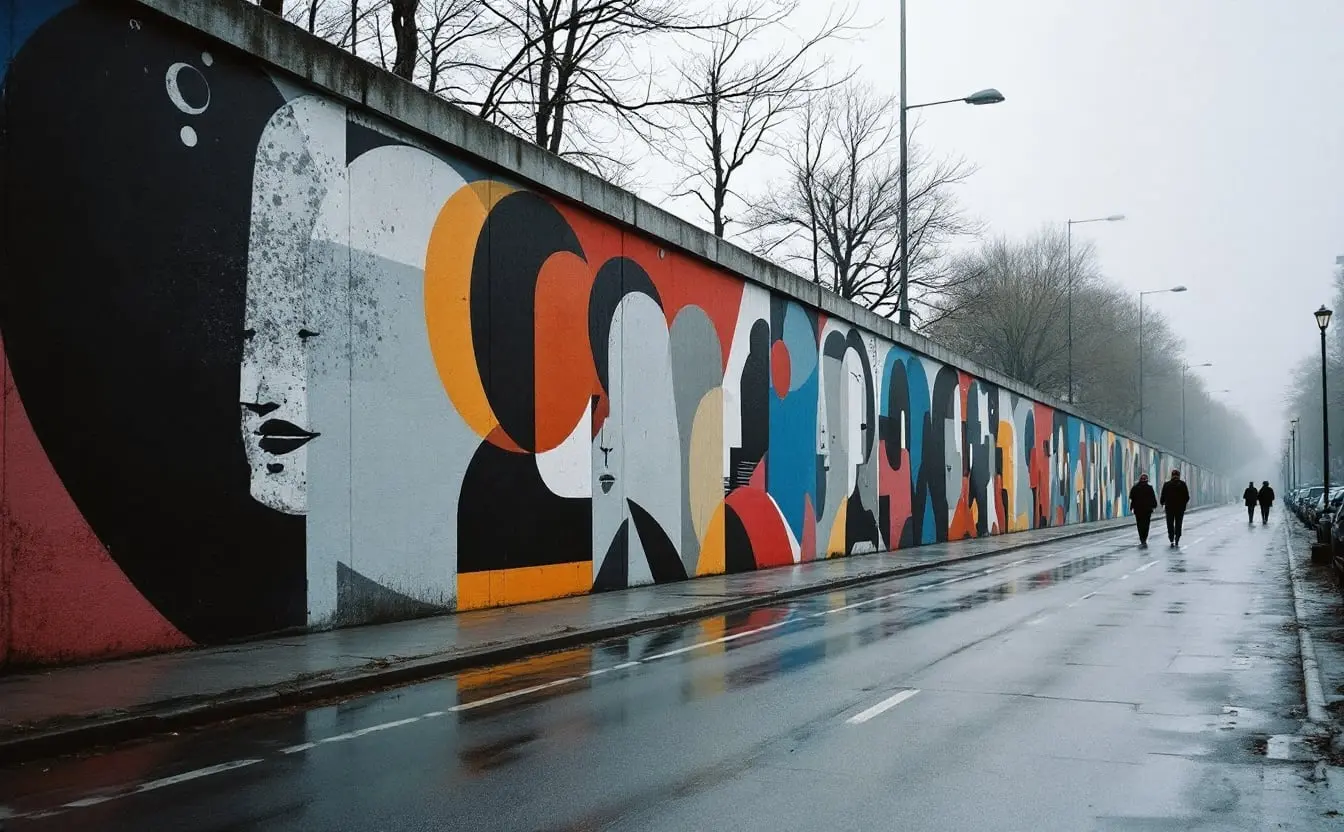
"Mural festival" covers several different kinds of event. Some invite a set of artists to paint large walls across a city over a week or two, with tours, talks and a party at the end. Some are graffiti jams, where dozens of writers paint long walls side by side over a weekend and lettering rules. A few are exhibitions in industrial buildings, and several cities now run their own programmes, adding walls with each edition and leaving a permanent trail behind. If the difference between writing, street art and commissioned murals is new to you, street art vs graffiti sets out the vocabulary.
Most of what happens outdoors is free to watch. Most of it also happens between late spring and early autumn, when walls are dry and the days are long enough for a painter to finish.
Nine festivals that keep coming back
Nuart, Stavanger (Norway)
Nuart has been running in Stavanger, on Norway's south-west coast, since 2001, which makes it one of the longest-running street art festivals anywhere. It has always cared as much about ideas as about walls: alongside the outdoor work there are exhibitions, talks and debate about what street art is for. Stavanger is compact, and years of editions have left work scattered through the centre and beyond, so even outside festival time a slow walk turns up pieces from past years. Smaller and odder interventions are part of the tradition here, so look down and into corners as well as up.
Upfest, Bristol (England)
Upfest grew from a small event in 2008 into what it bills as Europe's largest street art and graffiti festival, spread across Bedminster and Southville in south Bristol. Over a festival, hundreds of artists paint walls, boards and shopfronts, and the streets fill with families, writers and people who came for a drink and stayed for the spray cans. Bristol's graffiti history runs deep, and walls painted at past editions line the streets around North Street. Upfest has taken fallow years between editions, so check whether it is running in the year you plan to go.
Meeting of Styles (Wiesbaden and beyond)
This one is a network rather than a place. It grew out of the graffiti meetings held in the late 1990s at the old Schlachthof, the former slaughterhouse grounds in Wiesbaden, and since 2002 it has organised events in many countries. The format is a classic jam: writers paint long walls together over a weekend, and the results lean heavily towards letters. Each event is run by local organisers, so the quality and the feel vary, and Wiesbaden still hosts editions. It is the purest festival on this list for anyone who wants to see graffiti writing rather than commissioned imagery.
Calle Libre, Vienna (Austria)
Calle Libre has run in Vienna since 2014, painting walls in late summer with a programme of workshops and guided tours. Recent editions have each had a focus district, often on the end walls of municipal housing, which puts big contemporary murals into residential streets most visitors never see. That makes it a good excuse to explore beyond the old centre, and older Calle Libre walls are scattered across several districts. The Vienna street art walk covers the Donaukanal walls if you want to add a stretch of legal graffiti to the same trip.
Waterford Walls, Waterford (Ireland)
Waterford, which is often called Ireland's oldest city, has hosted this festival since the mid-2010s. Over ten days or so, artists paint walls across the compact centre, and the programme adds a graffiti jam, talks, screenings and a street party. Because the centre is small, a few years of editions have left murals on lanes, car parks and gable ends within a short walk of each other. It is one of the easiest festivals in Europe to see on foot, and the trail is there to follow even when the lifts have gone.
Asalto, Zaragoza (Spain)
Asalto has been painting Zaragoza for around two decades, organised together with the city council. Editions have moved around the city, sometimes into the centre and sometimes into outer neighbourhoods, with guided visits and activities for residents alongside the walls. The result is a scattered collection of murals across a city that gets fewer art tourists than Madrid or Barcelona, which is part of the appeal. Expect heat if you go in the painting season and plan your walking for the early morning.
Street Art Fest Grenoble-Alpes (France)
Grenoble's festival began in 2015 and runs over several weeks in late spring and early summer, with new murals spread across the city and the towns of the surrounding metropolitan area. It pairs the walls with an indoor exhibition, which helps on a rainy day. The accumulated collection now runs to hundreds of works, so you can build a whole weekend around it, with the mountains filling the end of almost every street. Ask the festival or the tourist office for a map of the walls, which is how you find the older pieces.
Urban Art Biennale, Völklingen (Germany)
This is the outlier: an exhibition rather than a live painting week. Since 2011 it has been held roughly every two years at the Völklinger Hütte in Saarland, a former ironworks that became a UNESCO World Heritage Site in 1994. Murals, installations, canvases and paste-ups fill halls and corners of the plant, and the rust, pipes and blast furnaces do half the work. It runs for months rather than days, and the site is a ticketed visit, so it suits anyone who cannot time a trip to a painting week.
MURO, Lisbon (Portugal)
Lisbon's urban art festival is run by the city council's Galeria de Arte Urbana and has returned roughly every two years since 2016. Each edition settles on a theme and a part of the city, which has included the riverside districts and Parque das Nações, and adds exhibitions, talks and guided visits to the new walls. Combined with the work the city has commissioned over the years, it is one reason Lisbon rewards a walker. The Lisbon street art walk is a good way to see the central walls before heading out to wherever the latest edition painted.
At a glance
| Festival | Where | Format | Worth seeing between editions? |
|---|---|---|---|
| Nuart | Stavanger, Norway | Invited artists, talks, exhibitions | Yes, walls across the centre |
| Upfest | Bristol, England | Mass live painting, family crowds | Yes, around North Street |
| Meeting of Styles | Wiesbaden and many other cities | Graffiti jam, letters | Depends on the host city |
| Calle Libre | Vienna, Austria | Invited artists, one district at a time | Yes, spread over several districts |
| Waterford Walls | Waterford, Ireland | Invited artists, jam, street party | Yes, compact city centre trail |
| Asalto | Zaragoza, Spain | Invited artists, neighbourhood activities | Yes, scattered across the city |
| Street Art Fest | Grenoble, France | Invited artists, indoor exhibition | Yes, across the metropolitan area |
| Urban Art Biennale | Völklingen, Germany | Exhibition in a former ironworks | Only while an edition is open |
| MURO | Lisbon, Portugal | City-run, themed by area | Yes, plus the city's other commissions |
Planning a trip around a festival
- Start on the festival's own site and its official social channels, and confirm the dates close to booking. Editions move, get skipped or change format.
- Come for the painting days rather than the closing party. The middle of the week is when walls change fastest and crowds are thinnest.
- Base yourself near the walls. Festivals that concentrate on one district reward a room within walking distance.
- Ask for the map. Most festivals publish one, and the walls from past years are often the better half of the visit.
- Stay outside the cordon. Lifts move, cans drip and overspray drifts further than you think.
- Talk to artists in their breaks, not mid-line, and credit them when you post photographs.
- Spend your money near the walls. A festival depends on the goodwill of the people who live with its paint.
If you like to know who painted what before you arrive, The World Atlas of Street Art and Graffiti surveys many of the artists who turn up on festival line-ups. Knowing a few names makes the walls easier to place.
Telling a good festival from a paint-by-numbers one
Not every mural festival is worth a flight. The good ones ask residents before they paint and give local artists walls alongside the touring names. They choose work that belongs to its street rather than images that could be dropped anywhere, and they think about what happens to a wall in ten years. The weaker ones repeat the same artists from city to city, leave nothing behind but photographs, and treat neighbours as an audience rather than hosts. For the logistics behind any event in the street, see planning a festival in public space, and for the gallery-world cousins of these events, art biennials in Southeast Europe.
My favourite moment at any of them comes after the end. The lift has been driven away, the cordon tape is in a bin, and someone on a third-floor balcony across the street stands with a cup in hand, looking at the new wall as if deciding whether to keep it.