Urban sketching for beginners: your first ten outings
Ten short sketching outings for beginners, from a cup on a café table to a busy market, with one thing to practise each time and books to read at home.

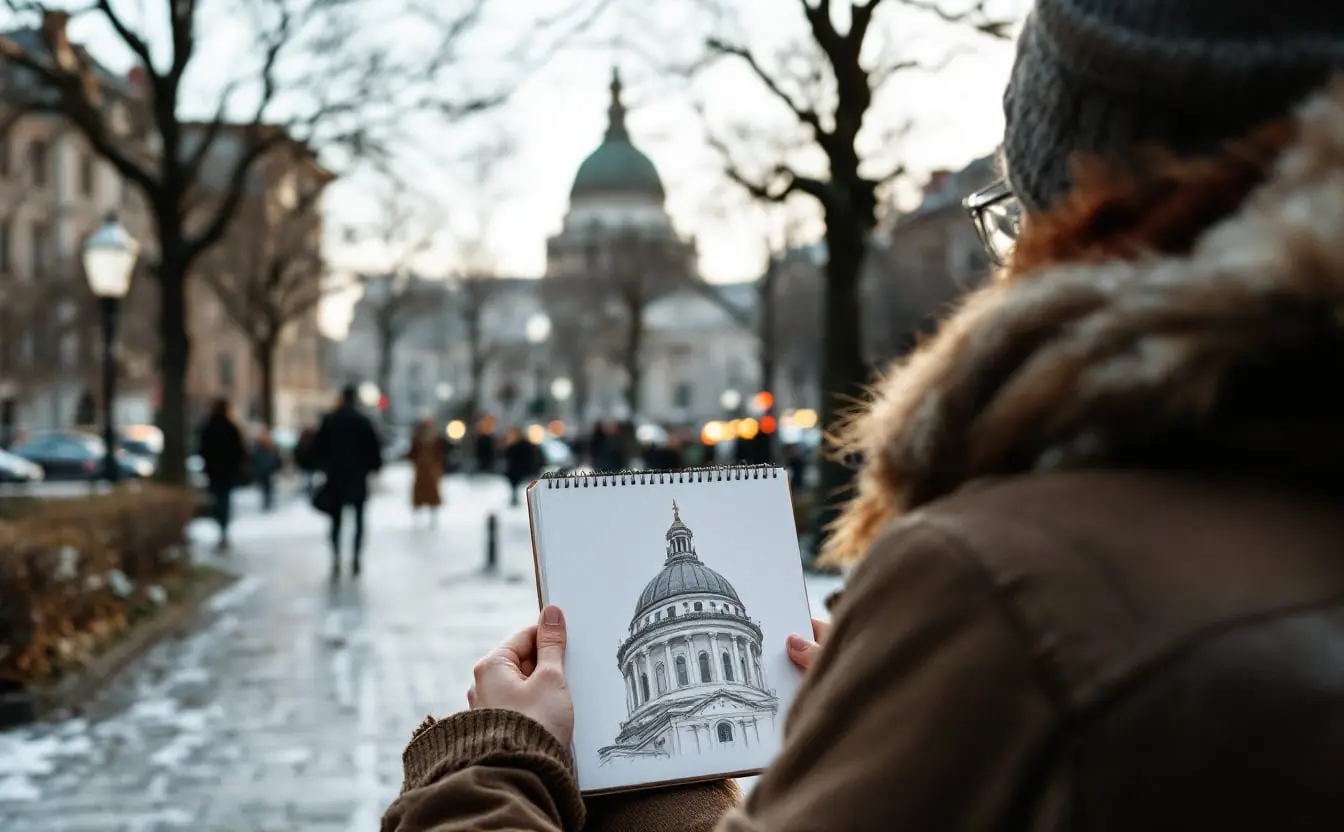
The hardest drawing is the first one made in public. It is not difficult in itself, since you choose the subject and nobody marks it, but you are certain that everyone in the square is looking over your shoulder. They are not. People waiting for a bus look at their phones, at the road, at the sky. The few who notice a stranger drawing tend to be curious and kind, and quite a few of them wish they did it too.
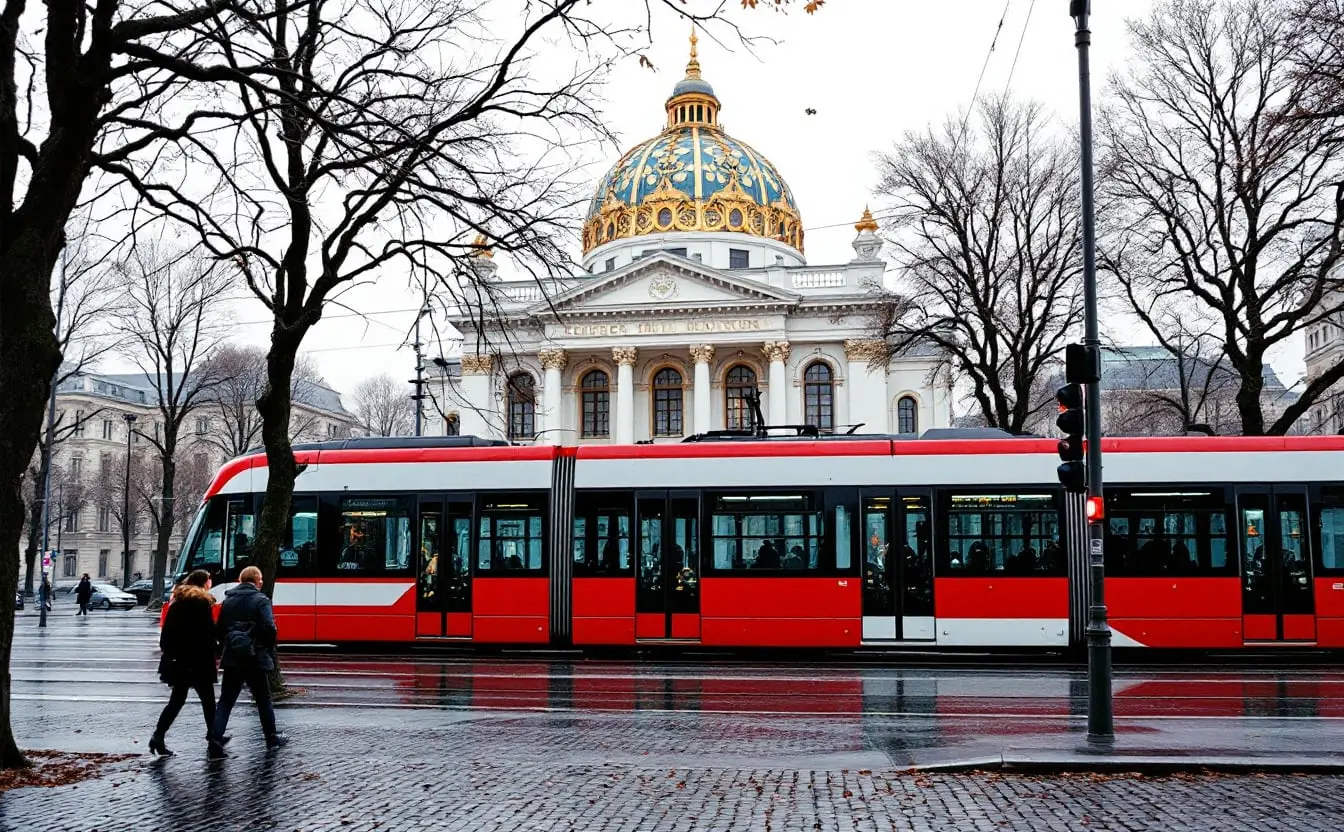
The way through that first nerve is to make the early outings small, short and specific. Below are ten, each with one thing to practise and a suggested kind of place. They are written for late autumn and early winter in a city like Bucharest, when the days are short and fingers go stiff after half an hour, so the first few happen indoors or close to a warm door. Do them in order if you like, or pick the ones that suit the week.
Before the first outing
You need very little. A sketchbook, a pen or pencil and, later, a small box of watercolours and a water brush is plenty; a fuller list, built around what fits in a coat, is in the guide to urban sketching supplies. Start with a pencil if ink feels too final. Move to a pen when you are ready to stop rubbing out.
Three habits make the difference over ten outings. Write the date and the place on every page. Never tear a page out, however bad it looks. And set a limit on time, twenty minutes at first and never more than an hour, so you stop while you still want to carry on.
The ten outings
1. A cup on a café table
Sit by a window with a coffee and draw the cup, nothing else. The aim is to look at the object more than at the page: let your eyes travel slowly round the rim while the pen follows. The ellipse at the top will be wrong, and that is the lesson. Draw the cup three times, a little faster each time, and notice that the third is usually the best.
2. Three small boxes
From a bench or a café window, draw three rectangles the size of a matchbox on one page. In each, sketch a different view of the same scene in five minutes, moving the edges so that one is mostly sky, one mostly street, one mostly a single building. You are practising choosing, which is half of every drawing. Pick the box you like best and draw it larger.
3. A doorway
Old front doors are ideal subjects: they stay still, they are full of shapes, and they fit a page. Hold your pencil at arm's length with your elbow straight, close one eye, and measure the width of the door against its height. Then check how many door widths fit between it and the next window. Measuring like this feels clumsy for a week and then becomes the most useful thing you know.
4. A street corner and your eye level
Perspective sounds like mathematics, but on the street you only need one idea. Your eye level is a horizontal line across the scene at the height of your eyes. If you are standing on flat ground, the heads of other standing adults sit roughly on that line, near or far. Draw it lightly first; rooflines above it slope down towards it, and kerbs below it slope up. Sit down and draw the same corner again, and watch the line drop to people's waists.
5. People waiting
Tram stops and station concourses are full of people who hold one pose for a minute. Give each figure thirty seconds and draw the whole body as one shape: the lean, the weight on one leg, the bag pulling a shoulder down. Leave faces out. Keep a respectful distance, don't fix on any one person for long, and leave children out unless a parent has nodded. If someone asks to see the page, show them.
6. A market
A big market such as Obor in Bucharest gives you everything at once: stacked crates, awnings, scales, steam, colour and noise. Stand against a wall or a pillar so you are out of everyone's way, buy something from the stall you are drawing, and say hello to the person behind it. Draw one stall rather than the whole hall. Aim for the mess and the piles, not neat outlines.
7. One building, from the outside in
Choose a single building with a strong outline: a church, a theatre, the domed Romanian Athenaeum with its columned front. Start with the silhouette against the sky, then the three or four biggest shapes inside it, and only at the end a few details where they matter most. Beginners usually do this in the opposite order and run out of page and patience. Leave most windows as dark marks.
8. Three colours only
Add colour on a day when the light is good. Limit yourself to three paints, perhaps a blue, a yellow and a reddish brown, and mix everything else from them, greys and greens included. Let the ink dry fully first. Paint the shadows before the lit sides, and leave some of the paper white. Three colours force decisions; twelve let you put them off.
9. A double page from a high point
Find somewhere with a long view: a bridge over the Dâmbovița, a footbridge over a railway, the top of a flight of steps. Small structures like these change how a walk feels, as a piece on stairs, bridges and shortcuts describes, and they give a sketcher height. Draw across both pages, from one side of the view to the other. It will take longer than any outing so far, so dress for it.
10. Draw with other people
The last outing is social. Many cities have urban sketching groups that meet at a set place, draw for an hour or two, and lay their books open side by side at the end. Join one, or start your own with a few neighbours and a notice at the library. Drawing next to other people removes most of the self-consciousness that this list began with. Places worth drawing together are easy to find on a walk through Bucharest's cultural spaces, and the wider question of how residents take part in culture runs through the participation and community strand.
Books for the evenings
Drawing outside is the practice; reading at home speeds it up. Three books cover most of what a beginner needs, each in a different way.
Marc Taro Holmes's The Urban Sketcher: Techniques for Seeing and Drawing on Location is a working course. It concentrates on drawing fast on location and on line and wash, with exercises you can take to the next outing. It suits someone who wants a method and is ready to follow one step by step.
Gabriel Campanario, a journalist and illustrator in Seattle, started the Urban Sketchers network online in 2007, and The Art of Urban Sketching collects pages by sketchers in dozens of cities with notes on how and where each was made. It is less a course than a long look at how other people solve the same problems, and it suits anyone who needs to see that there is no single right way to draw a street.
Stephanie Bower, an architectural illustrator, wrote The Urban Sketching Handbook: 101 Sketching Tips as a small book of short, illustrated pointers. Each tip fits on a page or two, so it suits readers who would rather pick up one idea on the tram and try it at the next stop than read a chapter.
These picks come from publisher details and published reviews rather than our own testing.
Questions beginners ask
Do I need to be able to draw already?
No. Every exercise above starts from looking, and looking improves with practice faster than anything else. Many adults who say they cannot draw simply stopped drawing as children, and they pick up from about where they left off.
What if the weather turns?
Draw from inside. Café windows, library reading rooms, station halls and covered markets all have views, and some of the best pages come from behind glass. Ask before you settle in anywhere with rules of its own.
How will I know I am getting better?
After the tenth outing, turn back to the first page. The cup will look stiff and careful, the doorway uneven, the people like coat hangers. Then look at the double page from the high point. The difference between them is the whole argument for going out again next week, with the same small book and a fresh date at the top of the page.